
 Log in
Emergence of Agentic Commerce: Is This Reshaping Online Payment?

The way people pay online has already changed a lot over the past decade, from card details manually entered on checkout pages to one-click payments and digital wallets. But something more subtle (and more powerful) is starting to take shape: payments that happen without you directly initiating them each time.
This is where agentic commerce comes in.Instead of you browsing, comparing, and completing purchases yourself, software agents, powered by AI, can make decisions and carry out transactions on your behalf. That shift doesn’t just change convenience; it changes how payments are structured, controlled, and secured.
So the real question isn’t just what is agentic commerce? It’s whether it’s quietly rewriting how online payments work.
- Emergence of Agentic Commerce: Is This Reshaping Online Payment?
- What Is Agentic Commerce?
- Why Now? The Conditions Driving Agentic Commerce
- How Agentic Commerce Is Changing Online Payments
- The Trust Problem: Who Controls the Money?
- Why Payment Infrastructure Needs to Evolve
- Where Bycard Fits Into Agentic Commerce
- Use Cases of Agentic Commerce in Payments
- Data Perspective: What This Means at Scale
- Is Agentic Commerce Really Reshaping Payments?
- What Needs to Happen Next
What Is Agentic Commerce?
Agentic commerce refers to a system where autonomous or semi-autonomous agents handle purchasing decisions and transactions based on user-defined preferences, goals, and constraints.
To put this into perspective, think about how much effort goes into a typical online purchase. You search for options, compare prices, check reviews, and then decide whether to complete the payment. With agentic commerce, that entire process can be delegated.
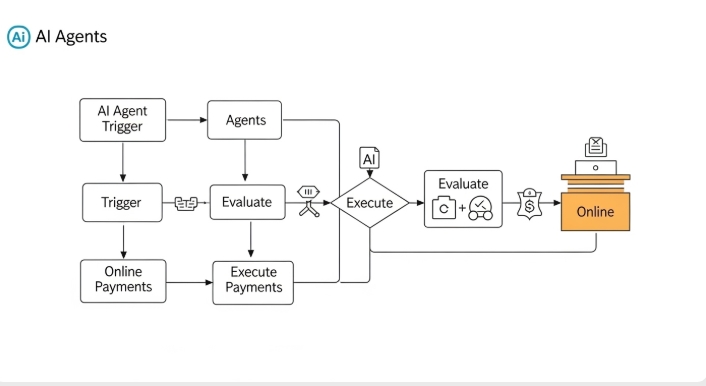
An AI agent can evaluate options, monitor conditions, and complete a transaction once your criteria are met. Whether it’s booking flights, managing subscriptions, or finding the best price across platforms, the agent doesn’t just assist; it acts.
What Makes It Different From Traditional E-Commerce?
The difference comes down to how decisions are made and executed.
In traditional e-commerce, every step is user-driven. You decide what to buy, when to buy it, and you manually approve each payment. Each transaction is a separate action that requires your attention.
With agentic commerce, that model shifts. You define rules once, and the system operates within those rules continuously. Instead of isolated transactions, payments become part of an ongoing process driven by conditions, timing, and priorities.
This moves payments from one-time events to continuous systems.
Why Now? The Conditions Driving Agentic Commerce
Agentic commerce is emerging now because several key developments have aligned.
First, AI systems are no longer limited to generating responses; they can now monitor conditions, respond to changes, and execute actions. This makes it possible for them to move beyond assisting decisions to actually completing transactions.
At the same time, payment infrastructure has evolved. Technologies like tokenization, automated billing, and secure authorization layers allow transactions to happen in the background without exposing sensitive data.
There’s also a behavioral shift. Users are already familiar with automation through subscriptions and recurring payments.
How Agentic Commerce Is Changing Online Payments
This is where the shift becomes more visible. Payments are no longer just a final step, they’re becoming embedded within decision-making systems.
From Checkout Pages to Invisible Transactions
In agentic systems, the traditional checkout experience begins to disappear. Instead of manually confirming each purchase, users define conditions in advance and allow transactions to occur when those conditions are met.
For example, you might set a rule to book a flight at or below a certain price and within a certain time window. Once that condition is satisfied, the system completes the transaction automatically.
This changes payments from something you actively perform into something that happens in the background, based on intent rather than immediate action.
From Static Budgets to Dynamic Spending Rules
Traditional budgeting often relies on fixed limits that require manual tracking. Agentic commerce introduces a more flexible approach, where spending is guided by rules that adapt to performance or usage.
For instance:
- Ad spend can increase when campaigns perform well and pause when results decline
- Subscriptions can renew only when they are actively used
- Spending can adjust based on predefined thresholds and conditions
This creates a system where financial decisions are continuously optimized instead of being manually enforced.
Increased Transaction Volume, Smaller Decisions
As agents take over decision-making, transaction patterns begin to shift. Instead of occasional large purchases, systems make smaller, more frequent decisions over time.
Each transaction becomes part of a broader optimization process. For businesses, this means handling more granular financial activity. For users, it shifts financial management from tracking individual purchases to overseeing how rules perform over time.
The Trust Problem: Who Controls the Money?
As convenient as agentic commerce sounds, it raises an important concern: if a system can spend on your behalf, how do you stay in control?
This is where many existing payment systems start to show limitations.
Key Risks in Agentic Payments
When transactions are automated and continuous, certain risks become more pronounced.
- Over-automation can lead to unnecessary or poorly optimized spending
- Security exposure increases as systems maintain ongoing authorization
- Visibility can drop if transactions happen without clear tracking
- Centralized payment methods make it harder to isolate issues
Without proper structure, these risks can quickly outweigh the benefits of automation.
Why Payment Infrastructure Needs to Evolve
To support agentic commerce, payment systems need to shift from:
- Single accounts → multi-layered financial structures
- Broad access → granular permissions
- Reactive monitoring → built-in controls
This is where tools like Bycard start to become relevant, not as an add-on, but as infrastructure.
Where Bycard Fits Into Agentic Commerce
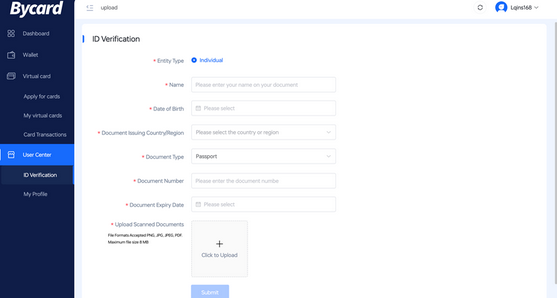
Agentic commerce depends on controlled autonomy. You want systems to act on your behalf, but within clearly defined boundaries. This is the gap Bycard is designed to fill.
Isolating Agent Activity With Virtual Cards
Instead of relying on a single card for all transactions, Bycard allows you to create dedicated virtual cards for different agents or use cases. This separation ensures that if one system behaves unexpectedly, it doesn’t affect your entire financial setup.
Setting Rules That Agents Must Follow
Agentic systems require clear guardrails. Bycard enables you to define spending limits, merchant restrictions, and usage controls, ensuring that every transaction stays within predefined boundaries.
Real-Time Visibility Across Automated Transactions
When payments are happening continuously, visibility becomes critical. Bycard makes it easier to track transactions by purpose, monitor activity in real time, and quickly identify unusual behavior.
Reducing Risk Without Slowing Down Automation
The goal isn’t just to secure payments, it’s to do so without interrupting automation. Bycard achieves this by structuring payment environments in a way that allows agents to operate efficiently while limiting exposure if something goes wrong.
Use Cases of Agentic Commerce in Payments
Agentic commerce becomes clearer when applied to real-world scenarios.
In e-commerce, agents can monitor prices across platforms and complete purchases when they reach a defined threshold. In marketing, spending can automatically adjust based on campaign performance, ensuring budgets are used efficiently.
For subscriptions, agents can evaluate usage and decide whether to renew, cancel, or switch providers. In travel and logistics, booking decisions can adapt dynamically based on pricing, availability, and timing.
Across all these examples, the pattern is consistent: decisions are continuous, and payments follow automatically.

Perfect Card for running ads!

Data Perspective: What This Means at Scale
Although agentic commerce is still evolving, early patterns suggest a clear shift in how payments behave.
Transaction frequency is likely to increase, with systems making smaller and more frequent decisions. At the same time, the average transaction value may decrease as spending becomes more granular.
For businesses, this introduces complexity. Payment systems must handle higher volumes of activity, fraud detection must adapt to automated behavior, and financial reporting becomes more detailed.
For users, the shift is more behavioral. Financial control moves away from reacting to individual purchases and toward designing the rules that guide those purchases.
Is Agentic Commerce Really Reshaping Payments?
The short answer is yes, but not in the way most people expect.
Agentic commerce isn’t replacing existing payment methods. Instead, it’s changing how they are used. Instead of initiating every transaction yourself, you’re moving toward systems that act based on your intent.
It’s a subtle shift, but a significant one.
What Needs to Happen Next
For agentic commerce to fully mature, three things need to align:
1. Better Control Layers
Users need tools that let them define how money is spent, not just where.
2. Clear Visibility
If payments are happening in the background, transparency becomes non-negotiable.
3. Structured Payment Systems
Loose, all-in-one payment methods won’t hold up. Segmentation and control will become standard.
Conclusion
Agentic commerce isn’t just about convenience; it’s really about delegation. Instead of manually approving every purchase, you’re setting instructions and allowing systems to act on them. In other words, you’re no longer directly spending money each time, you’re defining how and when it should be spent.
That shift has wider implications than it first appears. Payments are no longer isolated actions; they become part of an ongoing system where transactions are triggered automatically, risks have to be managed continuously, and control depends on the rules you put in place upfront. It changes the role of the user from someone who reacts to payments to someone who designs how payments happen.
This is exactly why payment infrastructure can’t remain the same. When transactions are happening in the background, there has to be a clear structure that keeps everything in check without interrupting the flow. That’s where Bycard becomes relevant. It introduces a layer of control that works quietly alongside automation, making it possible for agentic systems to operate without everything becoming chaotic or exposed.

CATEGORIES

轻松完成账单支付的 Google Ads 支付方式指南现已上线
Wise vs Revolut? Comparing the Best Multi-Currency Card 2026
Wise Alternatives That Make Payment Faster and Currency Conversion Simple

Wire Transfer vs Bank Transfer – Swift Business Payments Now

Why Virtual Cards Matter in Digital Payments Now

Why Travel Rewards Credit Cards are Highly Important
