
 Log in
Are Stablecoins Replacing Wire Transfers in B2B Payments?
Businesses don’t just move money, they move it across borders, time zones, and layers of approvals, which is why stablecoins have started gaining attention in B2B payments. For decades, wire transfers have been the default for cross-border transactions, mainly because they are trusted and widely accepted, even if they are slow and costly.
But the way businesses operate today is changing. Companies want faster settlement, lower transfer costs, and more visibility over their payments. This shift is what has brought stablecoins into the conversation, not as a full replacement for wire transfers, but as an alternative that fits certain use cases better. Platforms like Bycard are also part of this shift, helping businesses decide when to use traditional banking rails and when to use newer payment methods.
- Are Stablecoins Replacing Wire Transfers in B2B Payments?
- How Stablecoins Might be Replacing Wire Transfers in B2B Payments?
- How Wire Transfers Work in B2B Payments
- Stablecoins vs Wire Transfers: A Practical Comparison
- Are Stablecoins Actually Replacing Wire Transfers?
- The Real Shift: Hybrid Payment Infrastructure
- Key Challenges Slowing Stablecoin Adoption
- Data Points: What the Numbers Are Saying
- What This Means for Businesses Today
How Stablecoins Might be Replacing Wire Transfers in B2B Payments?
Stablecoins are a type of cryptocurrency designed to maintain a steady value, usually pegged to a fiat currency like the US dollar. Unlike volatile crypto assets, they’re built for predictability, something businesses care about.
How Stablecoins Work in Payments
Most stablecoins are backed 1:1 by reserves such as cash or short-term government securities. When used for payments:
- A business converts fiat into stablecoins
- Sends them over a blockchain network
- The recipient converts them back into local currency (or holds them)
The process removes several intermediaries that traditional banking relies on. However, in practice, businesses don’t want to manually manage wallets, conversions, and compliance. This is where platforms like Bycard come in, bridging crypto rails and traditional finance so payments feel familiar but move faster.
Why Businesses Are Paying Attention
Stablecoins are gaining traction in B2B payments for a few practical reasons:
- Settlement speed: Transactions can settle in minutes, not days
- Lower transaction costs: Especially for cross-border transfers
- 24/7 availability: No dependency on banking hours or holidays
- Transparency: Clear, traceable transaction records
With Bycard, these advantages become easier to operationalize. Instead of handling blockchain complexity internally, businesses can route payments through a structured system that supports stablecoin-backed transactions while maintaining control over spend, approvals, and reporting.
How Wire Transfers Work in B2B Payments
Wire transfers have been the backbone of international business payments for decades. They’re widely trusted and deeply integrated into financial systems.
The Traditional Wire Process
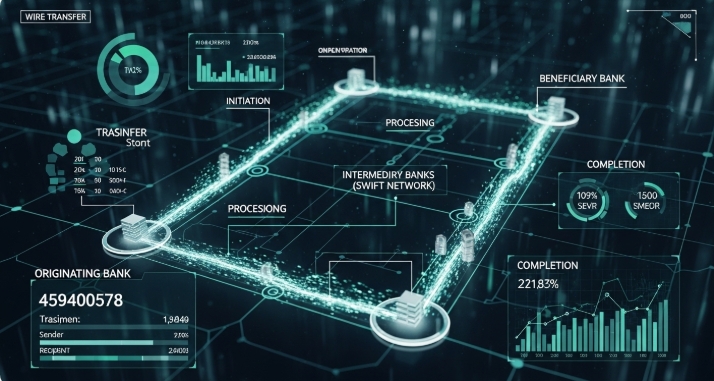
A typical cross-border wire involves:
- Sending bank initiates the transfer
- Payment moves through intermediary banks (correspondent banking)
- Receiving bank credits the beneficiary
Each step can introduce delays, fees, and friction.
Key Limitations of Wire Transfers
Despite their reliability, wire transfers come with trade-offs:
- Slow settlement: 1–5 business days for international transfers
- High fees: Sending, receiving, and intermediary bank charges
- Limited transparency: Tracking payments can be unclear
- Restricted hours: No processing on weekends or holidays
For finance teams trying to move quickly, these delays can impact supplier relationships and cash flow planning. This is one of the reasons companies are exploring alternatives, and why platforms like Bycard are designed to reduce these inefficiencies without fully abandoning traditional rails.
Stablecoins vs Wire Transfers: A Practical Comparison
Instead of thinking in abstract terms, it helps to compare both systems side by side.
| Factor | Stablecoins | Wire Transfers | Where Bycard Fits In |
| Speed & Settlement | Near-instant (minutes) | 1–5 business days | Enables faster settlement options while keeping structured workflows |
| Cost Structure | Lower network fees | Higher fees + FX charges | Optimizes routing to reduce total transfer costs |
| Accessibility | Internet + digital wallet | Requires banking network | Simplifies cross-border payments without complex banking setup |
| Transparency | Real-time tracking on-chain | Limited, often manual tracking | Centralizes visibility across all payment types |
| Compliance | Evolving regulations | Fully regulated system | Helps balance compliance with flexible payment rails |
Are Stablecoins Actually Replacing Wire Transfers?
Short answer: not entirely, but they’re definitely reshaping parts of the system.
Where Stablecoins Are Already Replacing Wires
Stablecoins are already being used in practical B2B payments where speed and cost matter. This includes cross-border supplier payments, freelancer and contractor payouts, treasury transfers for global businesses, and frequent low-value international transactions. In these cases, companies often use platforms like Bycard to handle the payment flow, making it easier to send, convert, and track funds without dealing with technical complexity.
Where Wire Transfers Still Dominate
Wire transfers are still common for large enterprise payments, regulated industries like finance and healthcare, and regions with strict or unclear crypto rules. They also remain important where detailed bank audit trails are required. Even here, Bycard can support businesses by offering alternative payment rails alongside traditional wires when faster or cheaper options are needed.
The Real Shift: Hybrid Payment Infrastructure
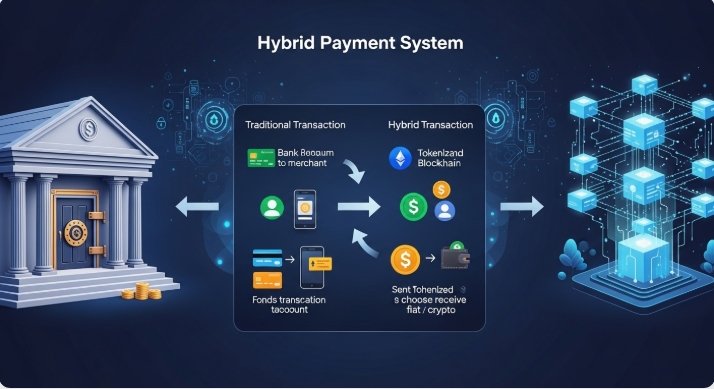
Most businesses aren’t choosing one system over the other, they’re combining both.
How Hybrid Systems Work
A typical setup might look like:
- Stablecoins used for fast cross-border transfers
- Local bank rails used for final settlement and compliance
Bycard is built around this hybrid reality. Instead of forcing businesses to choose, it allows them to switch between payment methods based on the transaction need.
Why This Matters for B2B Payments
The future of digital payments in B2B isn’t about replacing banks, it’s about reducing friction.
Stablecoins act as a faster settlement layer, while traditional systems handle compliance, reporting, and integration. Bycard sits in between, helping businesses use both without added complexity.
Key Challenges Slowing Stablecoin Adoption
Even with clear advantages, stablecoins aren’t a universal solution yet.
Regulatory Uncertainty
Different countries treat stablecoins differently. This creates hesitation for businesses operating across multiple jurisdictions. Platforms like Bycard help navigate this by structuring payments in a way that aligns with existing financial frameworks.
Trust and Stability Concerns
Trust depends on:
- The quality of reserves
- Transparency of issuers
- Market confidence
Businesses typically mitigate this by using established stablecoins and trusted payment platforms.
Integration Complexity
Managing wallets, private keys, and blockchain transactions isn’t straightforward for most finance teams. Bycard removes this barrier by providing a familiar interface for handling these payments.
Counterparty Risk
Stablecoin transactions can involve exchanges, custodians, and networks. Using a structured platform reduces exposure by consolidating these touchpoints.
Data Points: What the Numbers Are Saying
To keep this grounded, here are some industry trends:
- Stablecoin transaction volumes have reached trillions annually, rivaling traditional payment networks
- Cross-border payment costs using stablecoins can be up to 80% lower than traditional methods
- Settlement times drop from days to minutes
- Adoption is strongest in emerging markets and global trade environments
These trends are part of why platforms like Bycard are gaining relevance, they help businesses actually take advantage of these efficiencies without rebuilding their entire payment infrastructure.
What This Means for Businesses Today
If you’re managing B2B payments, the goal isn’t to replace one system entirely. It’s about using the right method for each transaction. Most businesses today are dealing with a mix of needs, speed, compliance, cost, and global reach, so a flexible setup matters more than a full switch.
When Stablecoins Make Sense
Stablecoins work well when speed and cost are priorities. If you’re paying international vendors or global contractors frequently, faster settlement can improve cash flow and relationships. They’re also useful when you want to reduce FX fees and avoid delays from intermediary banks.
In this setup, Bycard helps by giving you access to faster payment rails without needing to manage the technical side, while still keeping payments structured and trackable.
When Wire Transfers Still Make Sense
Wire transfers are still important for high-value or compliance-heavy transactions. They’re also necessary when working with institutions that rely strictly on traditional banking systems or in regions with strict crypto regulations.
Even here, Bycard can still play a role by helping you manage both payment methods in one place, so you’re not switching between systems for different transactions.
Conclusion
Stablecoins are changing how B2B payments work, especially for cross-border transactions. They offer faster settlement, lower costs, and more transparency, but they also come with regulatory and operational considerations.
Wire transfers remain deeply embedded in the global financial system and continue to play a key role where compliance and trust are non-negotiable.
So, are stablecoins replacing wire transfers? Not entirely. But with platforms like Bycard enabling hybrid payment infrastructure, businesses now have more flexibility in how they move money, and that shift is already underway.

CATEGORIES

轻松完成账单支付的 Google Ads 支付方式指南现已上线
Wise vs Revolut? Comparing the Best Multi-Currency Card 2026
Wise Alternatives That Make Payment Faster and Currency Conversion Simple
Wire Transfer vs Bank Transfer – Swift Business Payments Now

Why Virtual Cards Matter in Digital Payments Now

Why Travel Rewards Credit Cards are Highly Important
