
 Log in
The Factors Behind BNB Chain’s 133% Stablecoin Boom
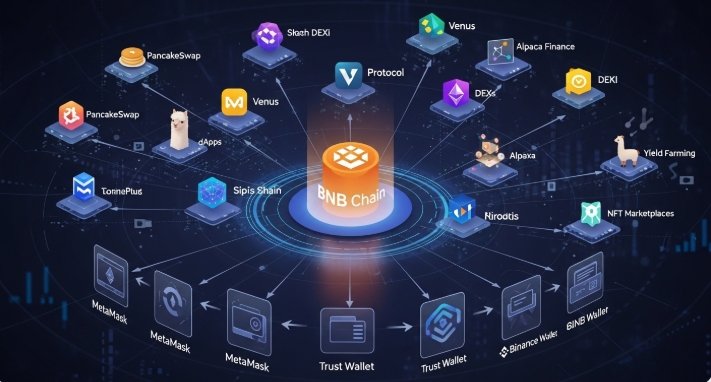
One blockchain grew its stablecoin volume 133% while others stagnated – here’s how.
While Ethereum maintained its dominance and Solana fought to recover from the FTX fallout, BNB Chain quietly executed one of the most impressive growth stories in crypto. Between early 2023 and early 2024, the blockchain’s stablecoin supply surged by 133%, transforming it from a secondary player into a legitimate competitor for transaction volume. For traders evaluating where to park their USDT, USDC, or other stablecoins, understanding what drove this growth isn’t just academic; it’s a practical question with real implications for your bottom line.
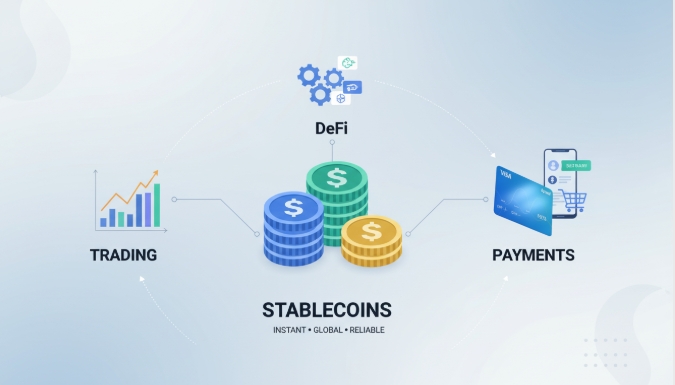
As stablecoins grow across networks like BNB Chain, their real utility increasingly extends beyond trading or DeFi. Tools like Bycard allow users to convert and spend stablecoins in everyday transactions, bridging the gap between blockchain activity and real-world payments. That means the chain users choose isn’t just about trading fees anymore; it also affects how easily those funds can be used outside crypto markets.
Why BNB Chain Captured Massive Stablecoin Market Share in 12 Months
The Stablecoin Landscape Reset
The period between 2023 and 2024 marked a pivotal shift in how crypto users thought about stablecoin infrastructure. Following the Terra/Luna collapse in 2022 and ongoing regulatory pressure, users became hypersensitive to two factors: cost efficiency and ecosystem reliability. Ethereum, despite its security advantages, faced persistent criticism over Layer 1 transaction fees. Even with Layer 2 solutions gaining traction, the psychological barrier remained: Why pay $5-15 for a stablecoin transfer when alternatives charged cents?
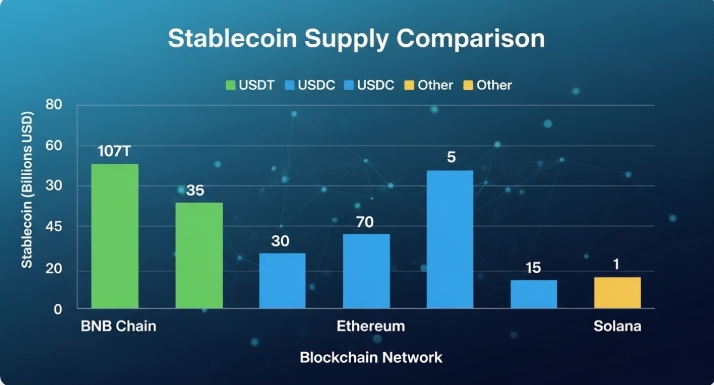
BNB Chain positioned itself precisely at this inflection point. The blockchain had already established credibility through Binance’s exchange dominance, but it was the systematic expansion of its DeFi ecosystem that catalyzed the 133% stablecoin growth. According to on-chain data, BNB Chain’s stablecoin supply grew from approximately $5.8 billion in early 2023 to over $13.5 billion by early 2024.
The Three Pillars of BNB Chain’s Growth
1. Fee Economics That Actually Matter
The average transaction fee on BNB Chain hovers around $0.10-0.50, compared to Ethereum’s $1-15 (depending on network congestion) and Solana’s sub-cent fees. For retail traders moving $100-1,000 in stablecoins, this difference is existential. A $10 Ethereum gas fee represents 10% of a $100 transaction, an unacceptable cost structure for most users.
BNB Chain’s fee model created a “Goldilocks zone”: cheap enough to compete with Solana for retail activity, but expensive enough to avoid the spam and network congestion issues that plagued ultra-cheap chains. This balance proved crucial for sustained growth. Low fees also make chains like BNB Chain attractive for users who eventually want to spend or move their stablecoins outside crypto ecosystems. Platforms such as Bycard benefit from lower network costs when processing payments or conversions, making it easier for users to move funds from blockchain wallets into real-world purchases without losing value to transaction fees.
2. Binance Ecosystem Integration
Binance’s decision to prioritize BNB Chain for withdrawals and deposits created a natural on-ramp for stablecoins. When users withdrew USDT from Binance, BNB Chain became the default suggestion, with lower fees than Ethereum, and more established than Tron for many Western users. This “soft forcing” of user behavior through UI defaults moved billions in stablecoin value onto the chain.
The psychological effect can’t be overstated: if the world’s largest exchange (by volume) treats BNB Chain as a primary network, users infer legitimacy and safety. This halo effect accelerated adoption beyond what pure technical merits would suggest.
3. DeFi Expansion and Yield Opportunities
BNB Chain’s Total Value Locked (TVL) in DeFi protocols grew from roughly $4 billion to over $8 billion during the same period as the stablecoin surge. This wasn’t a coincidence; it was cause and effect. Protocols like PancakeSwap, Venus Protocol, and newer entrants offered competitive yields on stablecoin deposits, creating retention mechanisms that kept capital on-chain.
Unlike speculative DeFi booms that evaporate quickly, BNB Chain’s growth showed staying power. Users came for the low fees, stayed for the yields, and found sufficient liquidity to make both trading and lending viable long-term strategies. However, yield farming and trading are only part of the stablecoin story. As ecosystems mature, users increasingly look for ways to move value from DeFi into everyday spending. Payment platforms like Bycard play a role here by enabling stablecoin holders to convert digital balances into usable purchasing power, giving users more flexibility once they exit DeFi positions.
Migration Patterns: Where Users Came From
On-chain analytics revealed three primary sources of BNB Chain’s stablecoin growth:
- Ethereum refugees: Users tired of gas fees, particularly retail traders with smaller portfolios, where percentage costs matter more
- CEX withdrawals: Binance users choosing BNB Chain over alternatives for platform exits
- New capital: Fresh stablecoin minting flowing into crypto, with BNB Chain capturing a disproportionate share due to lower entry friction
The third category proved most significant for sustained growth. As crypto markets stabilized in 2023-2024, new users entering the ecosystem needed a low-cost environment to experiment. BNB Chain’s combination of Binance brand recognition and practical fee structure made it the path of least resistance.
Comparing Growth Rates Across Ethereum, Solana, and BNB Chain
Ethereum: The Incumbent’s Plateau
Ethereum entered the period with approximately $70-80 billion in stablecoin supply, representing over 60% of all on-chain stablecoins. By early 2024, this figure had grown to roughly $85-90 billion, respectable in absolute terms, but representing only 10-15% growth.
The stagnation wasn’t due to a lack of security or ecosystem depth. Ethereum remains the gold standard for institutional stablecoin settlement and large DeFi protocols. But for the marginal user, the trader deciding where to park $500 in USDT, Ethereum’s value proposition weakened.
Ethereum’s Challenge: Layer 2 solutions (Arbitrum, Optimism, Base) fragmented liquidity. While L2s offered lower fees, they also created user experience friction: bridging assets, managing multiple wallets, and tracking balances across chains. For power users, this complexity was manageable. For the average trader, it was a deterrent.
The result? Ethereum maintained dominance in high-value transactions (institutional flows, large DeFi positions) but lost ground in retail transaction volume, precisely the segment driving BNB Chain’s growth.
Solana: The Post-FTX Recovery Story
Solana’s stablecoin supply collapsed from over $4 billion pre-FTX to under $1 billion in the immediate aftermath. The association with Sam Bankman-Fried’s empire created existential fear around the network’s viability. By early 2024, Solana had recovered to approximately $2.5-3 billion in stablecoin supply, impressive resilience, but still representing a 25-40% deficit from pre-crisis levels.
- Solana’s Advantage: Transaction speeds and sub-cent fees. For users prioritizing raw performance, Solana offered the best technical experience. The network processed thousands of transactions per second with minimal cost.
- Solana’s Obstacle: Trust deficit. Despite technical recovery and network uptime improvements, the psychological scar from FTX persisted. Traders remembered the week in November 2022 when SOL crashed 60%, and the ecosystem’s future seemed uncertain. Rebuilding that confidence took time, time during which BNB Chain was aggressively capturing market share.
Solana’s 150-200% recovery growth from the bottom was impressive, but it was recovery, not expansion. The network was regaining lost ground, not pioneering new territory.
BNB Chain: The Growth Leader’s Formula
BNB Chain’s 133% growth represented pure expansion, not recovery. The blockchain grew from $5.8 billion to $13.5 billion without a preceding collapse to recover from. This growth came from:
Transaction Cost Comparison (Average Stablecoin Transfer):
- Ethereum L1: $3-12
- Ethereum L2s: $0.50-2
- BNB Chain: $0.10-0.50
- Solana: $0.001-0.01
BNB Chain positioned itself as the “practical choice”, not the cheapest (Solana), not the most secure (Ethereum), but the best balance for most use cases.
Throughput and Reliability:
- Ethereum: ~15-30 TPS (L1)
- BNB Chain: ~100-160 TPS
- Solana: ~2,000-3,000 TPS
BNB Chain’s throughput was sufficient for current demand without the instability issues that plagued Solana during peak usage. The network found a sustainable equilibrium between speed and reliability.
DeFi TVL Correlation:
The relationship between DeFi TVL and stablecoin supply proved more pronounced on BNB Chain than competitors. For every $1 billion increase in DeFi TVL, stablecoin supply grew approximately $1.5-1.7 billion, suggesting stablecoins weren’t just passing through; they were being deployed productively within the ecosystem.
On Ethereum, this ratio was closer to 1:1, and on Solana (given a smaller sample size and volatility), the correlation was less clear. BNB Chain’s tighter correlation indicated a healthier ecosystem where stablecoins served functional purposes beyond speculation.
What Drives Users to Choose Specific Chains for Stablecoin Transactions
The Decision Matrix for Traders
After analyzing the growth patterns, a clear decision framework emerges for where users deploy stablecoins:
For Transaction Value < $1,000: Fee Sensitivity Dominates
Retail traders moving smaller amounts prioritize absolute fee costs over percentage-based security considerations. A $5 gas fee on a $200 transaction is a 2.5% haircut, unacceptable for frequent traders. This segment overwhelmingly favors BNB Chain or Solana.
BNB Chain wins this category when users value brand recognition (Binance connection) and an established ecosystem over Solana’s slightly lower fees.
For Transaction Value $1,000-$10,000: Balance of Factors
Mid-size transactions introduce more complex calculations. Users weigh:
- Fee as a percentage of the transaction (lower priority than small transactions)
- Ecosystem depth (DeFi opportunities, available protocols)
- Security/reliability perceptions
- Liquidity for potential exits
BNB Chain captured this segment through superior ecosystem depth versus Solana while maintaining significant fee advantages over Ethereum. The trader with $5,000 in USDT could access mature lending protocols, liquidity pools, and derivatives while paying minimal fees, a combination hard to match.
For Transaction Value > $10,000: Security Paramount
Institutional flows and high-value retail transactions still gravitate toward Ethereum despite fees. When moving $100,000 in stablecoins, a $50 gas fee is negligible, but network security and settlement finality are critical.
Ethereum’s dominance in this category explains why it maintained overall market share despite losing transaction count to BNB Chain. Value-weighted, Ethereum still processes the lion’s share of stablecoin economic activity.
Ecosystem Maturity and Application Availability
The “killer apps” for stablecoin usage differ by chain:
- Ethereum: Institutional DeFi (Aave, Compound, Maker), complex derivatives, tokenized real-world assets
- BNB Chain: Retail DeFi (PancakeSwap, Venus), gaming integrations, launchpads, simpler yield strategies
- Solana: High-frequency trading, NFT marketplaces, gaming with micro-transactions
Another emerging layer of the ecosystem involves payment infrastructure. As stablecoins move beyond trading and lending, services like Bycard enable users to convert crypto balances into spendable funds. This growing payment layer complements DeFi by providing a real-world exit for stablecoin liquidity accumulated on chains like BNB Chain.
Liquidity Considerations: The Network Effect
Liquidity begets liquidity. As BNB Chain’s stablecoin supply grew, it reached critical mass for self-sustaining network effects:
1. More stablecoins → deeper liquidity pools
2. Deeper pools → lower slippage for trades
3. Lower slippage → attracts more traders
4. More traders → protocols build on the chain
5. More protocols → more stablecoin demand
This virtuous cycle, once initiated, proved difficult for competitors to disrupt. Solana’s technical advantages couldn’t overcome BNB Chain’s liquidity moat in many DeFi categories.
Security vs. Speed: The Underrated Trade-off
The narrative often frames blockchain selection as “security vs. speed,” but the reality is more nuanced. Users don’t choose maximum security or maximum speed, they choose “sufficient” security and “sufficient” speed at the lowest cost.
BNB Chain’s security model (Proof of Staked Authority with 21 validators) is objectively less decentralized than Ethereum’s thousands of validators. Yet for the majority of stablecoin users, this theoretical security difference was irrelevant to practical risk.
The question wasn’t “Which chain is most secure?” but “Which chain is secure enough for my use case at the best price?” BNB Chain answered affirmatively for a massive segment of users.
Future Outlook: Sustainability of Growth
Can BNB Chain sustain 133% annual growth? Almost certainly not, such rates are characteristic of early rapid adoption, not mature markets. However, several factors suggest continued outperformance:
Favorable Tailwinds:
- Binance continues prioritizing BNB Chain infrastructure
- DeFi ecosystem maturation is bringing new use cases
- Potential for tokenized assets and RWA integration
- Geographic expansion in markets where Binance has strong presence
Potential Headwinds:
- Regulatory scrutiny of Binance is affecting the chain perception
- Ethereum L2s are solving fee problems and recapturing users
- Solana’s continued technical improvements and ecosystem recovery
- Emergence of new Layer 1 competitors with superior technology
The most likely scenario: BNB Chain’s growth moderates to 30-50% annually, still outpacing Ethereum but from a higher base. The chain successfully transitions from “rapid growth” to “sustainable expansion,” maintaining its position as the leading chain for retail stablecoin activity.
The Bottom Line for Traders
BNB Chain’s 133% stablecoin growth wasn’t the result of a single innovation or marketing campaign; it was the outcome of systematic execution across multiple dimensions. The blockchain offered:
- Practical fee economics for retail traders
- Sufficient security for most use cases
- Ecosystem depth rivaling established competitors
- Strategic positioning through Binance integration
For traders evaluating where to conduct stablecoin activity, the data suggests a tiered approach:
- Small, frequent transactions: BNB Chain or Solana
- Mid-size DeFi engagement: BNB Chain
- Large institutional flows: Ethereum
- High-frequency trading: Solana
The blockchain landscape isn’t winner-take-all. Each chain serves different user segments effectively. BNB Chain’s growth demonstrates that a massive opportunity exists for platforms that execute well on “good enough” decentralization with superior user experience and cost structure.
Conclusion
BNB Chain’s 133% stablecoin growth demonstrates that practical usability often wins in crypto markets. Lower fees, strong exchange integration, and a growing DeFi ecosystem helped the chain attract a massive wave of retail stablecoin activity. But the evolution of stablecoins isn’t stopping at trading or yield farming. As crypto adoption expands, the ability to move digital dollars into everyday transactions becomes increasingly important.
This is where infrastructure layers like Bycard fit into the broader ecosystem. By allowing users to convert and spend stablecoins more easily, platforms like Bycard help transform blockchain liquidity into real-world utility. As stablecoins continue spreading across networks like BNB Chain, Ethereum, and Solana, the next phase of growth may depend less on speculation and more on how seamlessly crypto integrates into everyday financial life.

CATEGORIES

轻松完成账单支付的 Google Ads 支付方式指南现已上线
Wise vs Revolut? Comparing the Best Multi-Currency Card 2026
Wise Alternatives That Make Payment Faster and Currency Conversion Simple

Wire Transfer vs Bank Transfer – Swift Business Payments Now

Why Virtual Cards Matter in Digital Payments Now

Why Travel Rewards Credit Cards are Highly Important
