
 Log in
Bankcard: A Practical Guide to Bankcard Services and Processing
A bankcard is a payment card used to make purchases, access funds, or process transactions through a financial institution or card network. For businesses, bankcard processing connects customers, merchants, card networks, issuing banks, and payment processors so transactions can be authorized, settled, and reconciled.
What Is a Bankcard?
A bankcard is a payment card issued or supported by a financial institution that allows consumers or businesses to make payments, access funds, or conduct card-based transactions. Bankcard processing enables merchants to authorize, settle, and reconcile those transactions.
Select Bankcard
Choosing a bankcard solution starts with understanding how payments will be accepted and what your business actually needs.
What to consider when you select bankcard services
Consider:
- Transaction volume
- Online versus in-person payments
- Debit and credit card acceptance
- Processing rates and fees
- Chargeback management
- Security and PCI compliance
- Settlement and reconciliation
- Customer support
Bankcard processing flow
A typical transaction moves from the customer and merchant through authorization, processing, settlement, and funding. Payment processors can also provide chargeback handling, reconciliation, reporting, and terminal support.
Bankcard Service
A bankcard service can include the technology and support required to accept and manage card payments.
Core bankcard service features
A strong service may include:
- Payment authorization
- Transaction processing
- Settlement and funding
- Chargeback management
- Fraud controls
- Payment reporting
- Reconciliation
- Customer support
Why reconciliation matters
Reconciliation helps businesses compare processed transactions with deposits and accounting records. This makes discrepancies easier to identify and can improve financial control.
National Bankcard Processing Fees
National bankcard processing fees can vary according to the processor, card type, transaction method, pricing model, and merchant’s processing volume.
What can influence processing fees?
Common cost components include:
- Interchange
- Card-network assessments
- Processor or markup fees
- Per-transaction charges
- Monthly or service fees
- Chargeback-related fees
NOTE
Interchange is a major component of card-processing costs and is paid to card-issuing banks through the payment-processing ecosystem.
Look beyond the advertised rate
Therefore, businesses should compare the total processing cost, not simply the headline transaction rate. National Bankcard, for example, states that its processing partners determine the actual processing rates and charges associated with referred merchants.
Global Payments Bankcard Processing
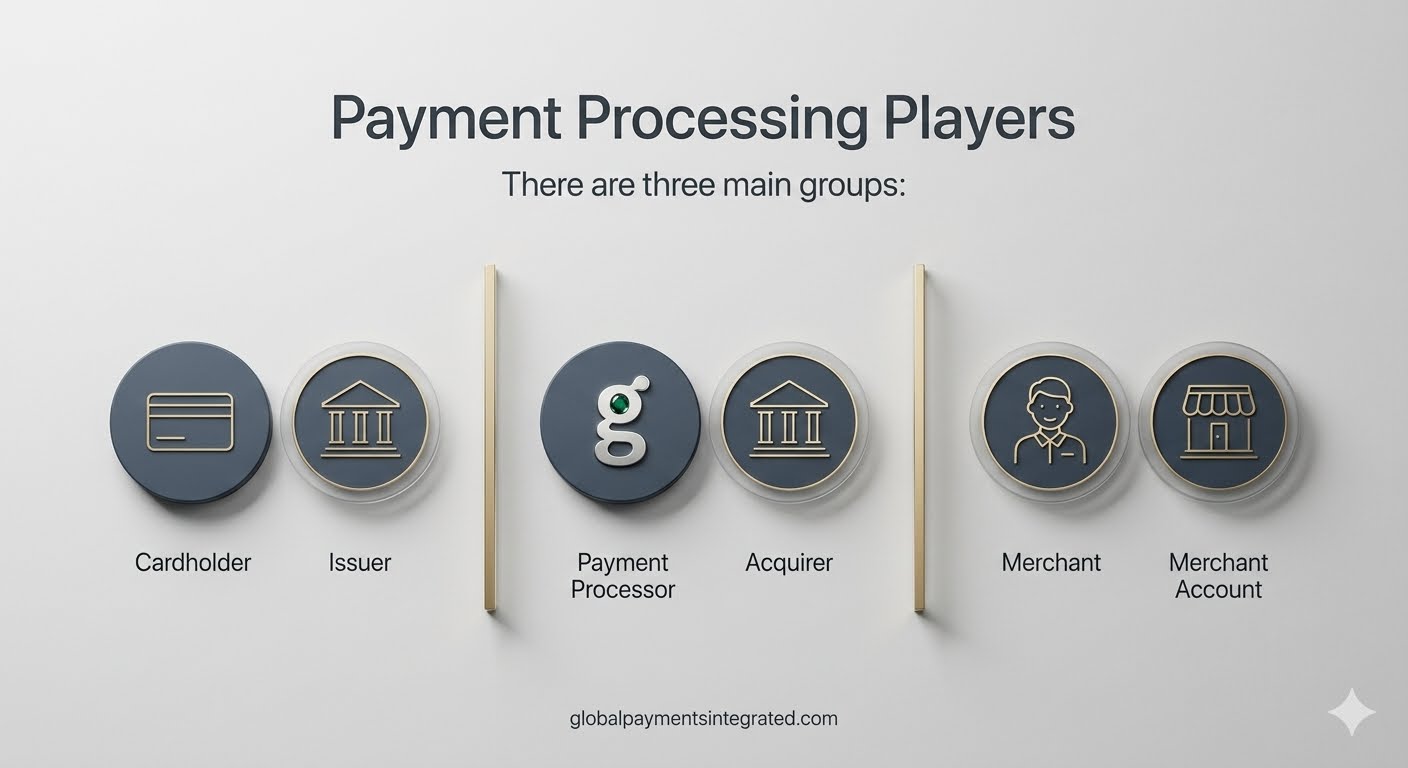
Global payments bankcard processing refers to the processing of card transactions through Global Payments’ merchant-services infrastructure.
How Global Payments bankcard processing works
A bankcard transaction typically involves:
- The customer initiates payment.
- The merchant submits the transaction.
- The processor routes the transaction for authorization.
- The card network and issuing institution participate in authorization.
- The transaction is settled.
- Funds are deposited with the merchant.
Global Payments describes its processing services as covering card authorization, settlement, reconciliation, chargebacks, reporting and related merchant-support functions.
PRO TIP: bankcard processing is more than the transaction rate
A useful comparison should therefore examine authorization quality, settlement timing, chargeback handling, reporting, security, reconciliation and support, rather than focusing exclusively on the advertised processing percentage.
Bycard and Bankcard Payments
Bycard approaches the bankcard topic from a digital-payment perspective. Its platform focuses on virtual cards, including virtual credit cards, spending controls, online payments and business expense management.
How Bycard fits into the bankcard ecosystem
Traditional bankcard processing primarily concerns accepting card payments from customers. Bycard’s virtual-card model instead helps businesses create and control cards for online spending, advertising, subscriptions and business expenses.
This distinction is important: bankcard processing and virtual-card spending are related but different payment use cases.
Why businesses may consider virtual cards
Virtual cards can provide:
- Controlled spending
- Dedicated cards for specific expenses
- Easier online payments
- Improved expense visibility
- Reduced exposure of physical card details
- Support for advertising and recurring payments
Bycard’s existing product positioning around virtual cards, business spending and media buying gives it a natural opportunity to connect educational bankcard content with its commercial virtual-card offering.

Perfect Card for running ads!
Bankcard vs. Virtual Card
A traditional bankcard may be physical or linked directly to a conventional banking relationship, whereas a virtual card exists digitally and is designed primarily for electronic transactions.
| Feature | Bankcard | Virtual card |
| Physical card | Often | No |
| Online payments | Yes | Yes |
| Spending controls | Depends on provider | Often configurable |
| Dedicated online use | Limited | Strong |
| Business expense tracking | Depends on service | Often supported |
Bankcard Security and Compliance
Security should be part of any bankcard decision.
Key safeguards
- PCI DSS compliance
- Fraud monitoring
- Secure payment authentication
- Access controls
- Tokenization where available
- Chargeback procedures
- Transaction monitoring
Global Payments’ payment-processing documentation also identifies security, fraud prevention, chargebacks and PCI-related requirements as important components of payment acceptance.
Conclusion
A bankcard solution should be evaluated on the complete payment experience, not just processing fees. Bycard can extend this topic into the growing use of virtual cards for controlled, secure and trackable business spending.

CATEGORIES

轻松完成账单支付的 Google Ads 支付方式指南现已上线
Wise vs Revolut? Comparing the Best Multi-Currency Card 2026
Wise Alternatives That Make Payment Faster and Currency Conversion Simple

Wire Transfer vs Bank Transfer – Swift Business Payments Now

Why Virtual Cards Matter in Digital Payments Now

Why Travel Rewards Credit Cards are Highly Important
