
 Log in
Asset Tokenization: Stablecoins Are Just the Beginning
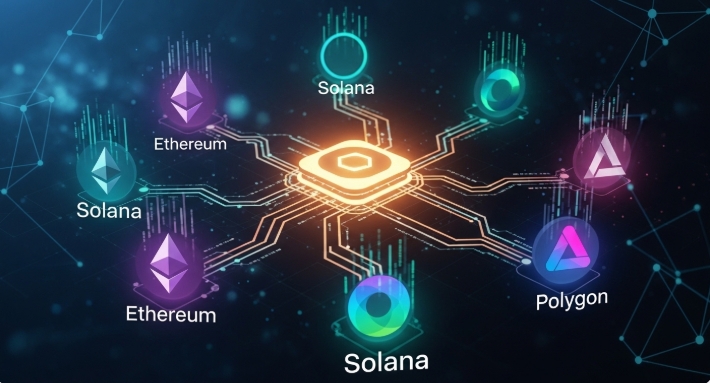
Stablecoins were the test run now trillions in real assets are getting tokenized.
The question isn’t whether asset tokenization will happen at scale, but when. And the answer is already visible in the infrastructure quietly built over the past five years. Stablecoins like USDC and USDT didn’t just create a $200+ billion market for dollar-pegged tokens they constructed the plumbing, established the regulatory precedents, and proved the commercial viability of representing real-world value on public blockchains. For institutional investors and crypto builders, understanding this connection is critical: stablecoins are the Trojan horse that makes tokenized securities, real estate, commodities, and private credit inevitable.
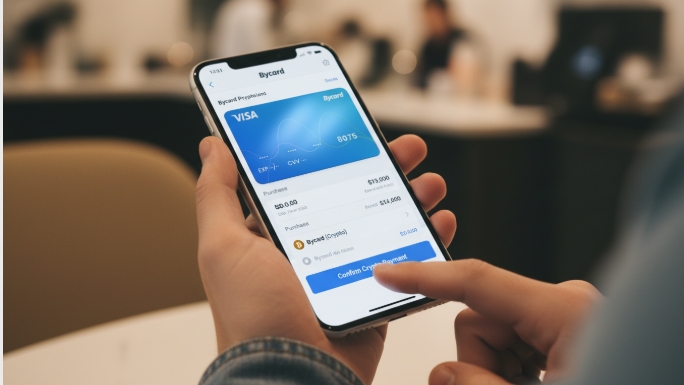
Platforms like Bycard now enable users to access tokenized assets directly from digital wallets, bridging traditional finance and blockchain infrastructure seamlessly.
The Foundation – Why Stablecoins Proved the Rails Work
Technical Infrastructure That Scales Beyond Payments
Stablecoins solved the hardest problems first. Before anyone would tokenize a Treasury bond or a commercial real estate property, blockchain infrastructure needed to handle:
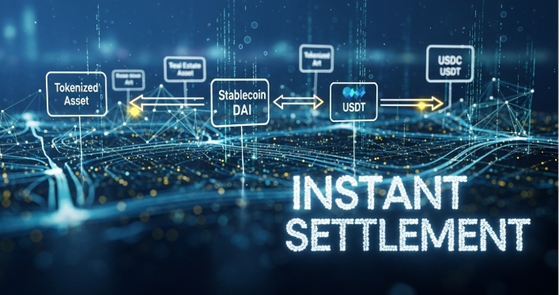
- 24/7 settlement with sub-second finality across multiple chains
- Institutional-grade custody with multi-signature security and recovery mechanisms
- Programmable compliance through smart contracts that enforce transfer restrictions, KYC requirements, and jurisdictional rules
- Atomic settlement that eliminates counterparty risk in trades
Circle’s USDC and Tether’s USDT have collectively processed over $30 trillion in transaction volume since 2018. This isn’t just payment rail testing, it’s a stress test for any tokenized asset. The infrastructure supporting stablecoins, bridging protocols, liquidity pools, oracle networks, and institutional custodians like Coinbase Prime and Fireblocks, now exists as public goods that any tokenized asset can plug into.
Bycard leverages this same infrastructure to allow instant purchases of tokenized real-world assets, making token ownership accessible to both retail and institutional users.
Consider the technical precedent: if a stablecoin can maintain its peg while processing millions of daily transactions across Ethereum, Solana, Polygon, and Avalanche, the same multi-chain infrastructure can support tokenized Apple shares or London real estate fractions. The rails are built.
Regulatory Clarity Emerging from Stablecoin Frameworks
Regulators worldwide cut their teeth on stablecoins, and the resulting frameworks are now being extended to broader asset tokenization. The EU’s Markets in Crypto-Assets Regulation (MiCA), which came into effect in 2024, established clear rules for stablecoin issuers around reserves, redemption rights, and operational requirements. These same principles, transparent reserves, regulated custodians, audit requirements – are now templates for tokenized securities.
In the United States, the path forward crystallized in 2024-2025 as stablecoin legislation advanced in Congress. The proposed frameworks separate payment stablecoins from securities, creating a regulatory sandbox that tokenized assets can operate within. When regulators approved BlackRock’s BUIDL tokenized Treasury fund and Franklin Templeton’s BENJI money market fund, they weren’t just blessing specific products, they validated the entire category of on-chain financial instruments.
Bycard operates under these regulatory frameworks, ensuring tokenized assets bought and sold through its platform meet compliance standards globally.
Stablecoins taught regulators that blockchain-based assets can be:
- Transparently audited (on-chain reserve proof)
- Programmably compliant (transfer restrictions in smart contracts)
- Jurisdictionally contained (geofencing through code)
- Investor-protected (redemption mechanisms and custody standards)
This regulatory learning curve saves years for every subsequent asset class seeking tokenization.
Settlement and Custody Systems Battle-Tested
Institutional adoption requires infrastructure that meets traditional finance standards. Stablecoins forced the crypto ecosystem to build it:
- Qualified custodians like Anchorage Digital, BitGo, and Coinbase Custody now hold billions in tokenized assets with insurance, regulatory compliance, and institutional SLAs
- Settlement finality through blockchain consensus mechanisms that major banks now accept as equivalent to traditional wire transfers
- Integration points with legacy banking systems, enabling seamless on/off-ramps between tokenized and traditional assets
When JPMorgan processes repo transactions using its JPM Coin, or when Visa settles USDC transactions directly, they’re validating infrastructure that tokenized stocks, bonds, and commodities will use tomorrow. Bycard’s custody layer leverages these tested systems, allowing users to safely hold tokenized assets while retaining instant transfer capabilities.
The Liquidity Layer – How Stablecoins Drive Tokenized Asset Demand
The $200 Billion On-Chain Liquidity Pool
Stablecoins created something unprecedented: massive pools of dollar-denominated liquidity that exist natively on-chain, 24/7, globally accessible, and programmable. As of early 2025, over $200 billion in stablecoin value circulates across blockchains, with daily trading volumes exceeding $100 billion.
This liquidity is the lifeblood for tokenized assets. Consider the mechanics:
1. An investor wants to buy tokenized BlackRock Treasury tokens (BUIDL)
2. They use USDC to purchase directly on-chain through a smart contract
3. Settlement is instant, atomic, and without intermediaries
4. The investor can then use those tokenized Treasuries as collateral in DeFi protocols to borrow more USDC
5. That borrowed USDC can purchase more tokenized assets or provide liquidity
With Bycard, users can tap into this liquidity directly, purchasing tokenized securities or real estate fractions with a single wallet, effectively integrating stablecoin and tokenized asset ecosystems.
Institutional Comfort with Blockchain Settlement
Stablecoins normalized blockchain settlement for institutions that would never have touched Bitcoin or Ethereum directly. Major financial players now routinely use stablecoins:
- Payment processors like Stripe and PayPal integrated USDC for cross-border settlements
- Trading firms like Jump Trading and Cumberland use stablecoins for 24/7 liquidity management
- Corporations hold stablecoins on treasury balance sheets for operational efficiency
- Banks from Standard Chartered to Société Générale issue and redeem stablecoins for clients
This institutional comfort doesn’t stay confined to stablecoins. Once a CFO experiences instant, low-cost cross-border settlement with USDC, they start asking: “Why can’t we do this with our accounts receivable? Our inventory? Our real estate assets?”
Bycard allows institutions and high-net-worth individuals to extend this same convenience to tokenized assets, bridging legacy finance and blockchain-native instruments.
Early Tokenized Assets Riding Stablecoin Rails
Tokenized Treasuries ($1.8B+ market):
Funds like BlackRock’s BUIDL, Franklin Templeton’s BENJI, and Ondo Finance’s OUSG allow investors to gain exposure to U.S. Treasuries while keeping assets on-chain. These products exist because stablecoin infrastructure solved custody, compliance, and liquidity. Investors purchase with USDC, receive tokenized Treasury exposure, and can trade 24/7 – impossible in traditional bond markets.
Private Credit ($800M+ tokenized):
Platforms like Centrifuge and Maple Finance tokenize private credit pools, allowing investors to deploy stablecoins into real-world loans. The stablecoin acts as both the investment currency and the settlement layer, with smart contracts automating repayment distributions.
Real Estate Fractions:
Companies like RealT and Lofty tokenize individual properties, allowing investors to buy fractions for as little as $50 using stablecoins. Rental income is distributed automatically in USDC or other stablecoins. This model – impossible without stablecoin payment rails – has tokenized hundreds of properties worth over $100 million.
Commodities and Carbon Credits:
Paxos Gold (PAXG) tokenizes physical gold ounces, tradable 24/7 against stablecoins. Carbon credit projects increasingly tokenize credits for instant settlement in stablecoin markets, bringing liquidity to previously illiquid environmental assets.
Each category proves the thesis: stablecoin infrastructure enables asset tokenization that would be economically unviable otherwise.
The Flywheel Effect: More Stablecoins Beget More Tokenized Assets
Network effects are compounding:
- Liquidity depth: Deeper stablecoin liquidity makes tokenized asset markets more efficient
- Developer tooling: Infrastructure built for stablecoins (wallets, analytics, compliance tools) works for any tokenized asset
- User familiarity: Investors comfortable with stablecoins face minimal friction adopting tokenized securities
- Cross-border access: Stablecoin rails enable global investors to access tokenized assets without forex conversion or banking intermediaries
Platforms like Xbankang, which provide liquidity for crypto assets with instant settlements, represent the user-facing layer of this infrastructure. As tokenized assets proliferate, the ability to quickly convert between crypto, stablecoins., and tokenized securities becomes increasingly valuable.
2026 Predictions – Full-Scale Tokenization Rollout
Regulatory Frameworks Crystallizing
By 2026, expect:
United States: Comprehensive stablecoin legislation passed, creating clear distinction between payment tokens and securities. The SEC approves multiple tokenized securities offerings under Reg D and Reg A+ frameworks, with streamlined approval for assets using approved stablecoin settlement rails.
European Union: MiCA fully implemented, with major European banks issuing MiCA-compliant stablecoins and tokenized deposit products. Cross-border tokenized asset trading within the EU becomes routine.
Asia-Pacific: Singapore, Hong Kong, and UAE establish themselves as tokenization hubs with clear regulatory frameworks. Japan and South Korea pilot central bank digital currencies (CBDCs) that interoperate with private stablecoins.
Emerging Markets: Countries facing currency instability increasingly recognize stablecoins and tokenized dollar assets as economic stabilizers rather than threats, leading to lighter-touch regulation.
Major Banks Launching Tokenized Deposit Products
The next frontier isn’t independent stablecoins – it’s banks tokenizing their own deposits:
- JPMorgan expands JPM Coin beyond institutional clients to retail, allowing deposit holders to use tokenized dollars across DeFi protocols
- Citi launches Citi Token for cross-border treasury management, processing billions in tokenized settlements monthly
- HSBC and Standard Chartered offer tokenized deposits that settle across Asian markets 24/7
- Regional banks white-label stablecoin infrastructure to offer competitive tokenized deposit products
These bank-issued stablecoins will accelerate tokenized asset adoption because they combine traditional banking relationships with blockchain efficiency.
Cross-Border Settlement via Stablecoin Rails Becomes Standard
By 2026, expect stablecoin settlement to capture:
- 15-20% of cross-border B2B payments in emerging markets
- $500B+ annual volume in tokenized trade finance
- Majority of crypto-to-crypto institutional trades settling in stablecoins rather than BTC/ETH
- Treasury departments at Fortune 500 companies routinely using stablecoins for liquidity management
The correspondent banking system’s inefficiencies – 3-5 day settlement, high fees, limited hours will drive corporations toward stablecoin rails for operational payments.
Asset Class Predictions: What Gets Tokenized by 2026
Likely to see significant tokenization (>$100B total value):
- U.S. Treasuries and investment-grade bonds
- Money market funds and cash equivalents
- Private credit and structured products
- Commercial real estate fractions (REITs on-chain)
- Commodities (gold, silver, oil futures)
Emerging categories ($10B-100B):
- Public equities (tokenized stocks, especially in markets with settlement inefficiencies)
- Collectibles and luxury goods (art, watches, wine)
- Intellectual property and royalties (music, patents, media rights)
- Carbon credits and renewable energy certificates
- Invoices and accounts receivable
Experimental but growing (<$10B):
- Personal income streams and creator tokens
- Tokenized venture capital and private equity funds
- Agricultural commodities and crop futures
- Insurance policies and catastrophe bonds
What Builders and Investors Should Prepare For
For Crypto Builders:
- Develop compliance infrastructure that works across jurisdictions
- Build bridges between tokenized assets and DeFi protocols
- Create user experiences that abstract blockchain complexity
- Focus on institutional custody and security standards
- Prepare for interoperability across multiple blockchains (Ethereum, Solana, Avalanche, and emerging L2s)
For Institutional Investors:
- Establish on-chain treasury capabilities (custody, wallets, compliance)
- Build expertise in smart contract risk assessment
- Develop relationships with regulated tokenization platforms
- Pilot small allocations to tokenized Treasuries and private credit
- Prepare legal and operational frameworks for 24/7 trading and settlement
For Retail Platforms:
Services like Xbankang that provide instant liquidity and competitive rates for crypto assets will become critical infrastructure as tokenization expands. Users will need seamless conversion between stablecoins, traditional crypto, and emerging tokenized assets. Platforms that can offer instant settlement, transparent pricing, and reliable customer support will capture outsized market share in this transition.
Conclusion
Stablecoins were the proving ground for tokenized asset infrastructure, demonstrating that trillions in real-world value can move on-chain efficiently and securely. Bycard leverages this foundation, bridging users, institutions, and tokenized assets while simplifying custody, settlement, and compliance.
The tokenization of everything is no longer a question of if it’s happening now. With the infrastructure, regulatory clarity, and liquidity in place, platforms like Bycard are positioned to make the next generation of financial assets widely accessible. The race toward a fully tokenized economy is on, and those who act now will lead the market.

CATEGORIES
Wise or Revolut? Comparing the Best Multi-Currency Card
Wise Alternatives That Make Payment Faster and Currency Conversion Simple

Wire Transfer vs Bank Transfer for Better & Swift Business Payments

Why Travel Rewards Credit Cards are Highly Important
Why the Ramp Card Might Be the Best Business Card

Why Sales and Discounts Make You Overspend
