
 Log in
Bilt 2.0 vs Amex Gold: The New Food Card Battle
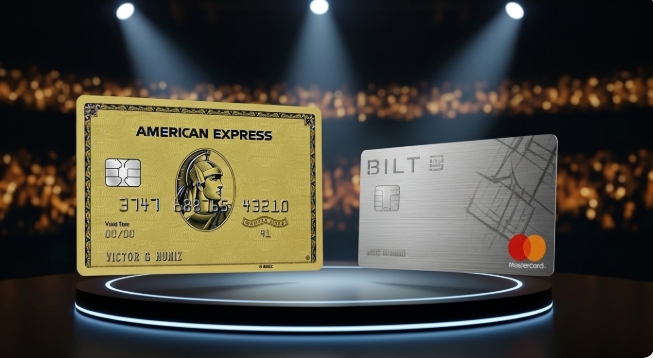
The Amex Gold just got dethroned by an unexpected challenger.
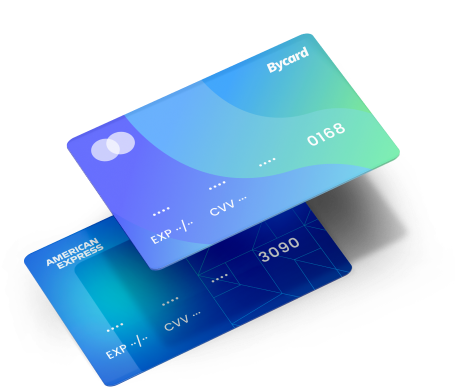
For years, the American Express Gold Card has reigned supreme as the go-to credit card for dining rewards enthusiasts. Its 4x points on dining at restaurants (including takeout and delivery) made it the automatic choice for foodies looking to maximize every meal. But Bilt’s recent 2.0 upgrade, specifically the introduction of the Bilt Obsidian tier, has thrown a wrench into this conventional wisdom. However, there are other cards like Bycard, which are effective for dining payments too
The question keeping rewards optimizers up at night: Is the Amex Gold still the best dining card, or has Bilt’s aggressive move changed the game entirely?
Let’s run the numbers and find out which card deserves a spot in your wallet.
The Dining Rewards Landscape Just Shifted
Before Bilt 2.0, the comparison was straightforward. Amex Gold offered 4x Membership Rewards points on dining, while the original Bilt Mastercard earned just 3x points on dining. For serious diners, the choice was obvious.
Then Bilt introduced its tiered system. Members who reach Obsidian status, achieved by spending $100,000 in a calendar year, now earn 5x points on dining. That’s a 25% boost over the Amex Gold’s earning rate, and it’s enough to make even the most loyal Amex cardholders reconsider their strategy.
But earning rates are only half the equation. The real value depends on what those points are worth when you redeem them.
Earn Rates and Redemption Values
Amex Gold: The Established Champion
The Amex Gold Card earns:
- 4x points at restaurants worldwide (including takeout and delivery in the U.S.)
- 4x points at U.S. supermarkets (up to $25,000 per year, then 1x)
- 3x points on flights booked directly with airlines
- 1x points on everything else
Membership Rewards points are widely considered one of the most flexible and valuable point currencies. You can transfer them to 17+ airline and hotel partners, including:
- Delta SkyMiles
- Air France-KLM Flying Blue
- British Airways Executive Club
- Marriott Bonvoy
- Hilton Honors
When transferred to the right partners, Membership Rewards points commonly deliver 1.5 to 2+ cents per point in value* for premium cabin flights and luxury hotel redemptions. Conservative valuations typically place them at *1.7 cents per point.
Effective return on dining with Amex Gold:* 4x × 1.7cpp = *6.8% back
Bilt Obsidian: The Disruptor
Bilt Obsidian members earn:
- 5x points on dining
- 4x points on travel
- 2x points on rent payments (without transaction fees)
- 1x points on everything else
(Note: Standard Bilt cardholders earn 3x on dining, 2x on travel, and 1x on rent and other purchases. The Obsidian tier requires $100,000 in annual spend.)
Bilt points transfer to a competitive roster of partners, including:
- American Airlines AAdvantage
- United MileagePlus
- Air France-KLM Flying Blue
- Virgin Atlantic Flying Club
- Hyatt World of Hyatt
- IHG One Rewards
Bilt also offers a unique 1:1 transfer to select American Airlines routes and allows points to be used toward rent payments, home down payments, or fitness memberships. Point valuations for Bilt tend to be similar to Membership Rewards when transferred to travel partners, around 1.5 to 1.7 cents per point.
Effective return on dining with Bilt Obsidian:* 5x × 1.7cpp = *8.5% back
On paper, Bilt Obsidian delivers 25% more value per dining dollar than Amex Gold. But there’s a massive catch: you need to spend $100,000 annually to unlock Obsidian status.
Annual Fees and Hidden Costs
Amex Gold: Premium Price, Premium Perks
The Amex Gold carries a $325 annual fee, which sounds steep until you factor in the credits:
- $120 Uber Cash ($10 per month for Uber rides or Uber Eats)
- $120 dining credit ($10 per month at Grubhub, The Cheesecake Factory, Goldbelly, Wine.com, Milk Bar, and select Shake Shack locations)
If you use both credits fully, the effective annual fee drops to $85. For many cardholders who already use Uber Eats regularly, the fee essentially disappears.
Additional perks include:
- No foreign transaction fees
- Access to Amex Experiences (presale tickets and dining reservations)
- Travel and purchase protections
Bilt: Zero Fee, But Obsidian Has a Sky-High Barrier
The Bilt Mastercard has $0 annual fee, which is remarkable for a premium rewards card. There’s no catch for the base tier, you get 3x on dining, 2x on travel, and the ability to pay rent without fees right out of the gate.
To reach Obsidian (and unlock 5x dining), you need:
- $100,000 in annual spend on the card
- No annual fee at any tier
Bilt’s additional benefits include:
- Rent Day promotions (monthly bonus opportunities)
- Status with major hotel and airline programs
- Points can be used toward home down payments through the Bilt Rewards Alliance
- Access to Bilt Dining (restaurant reservations and exclusive experiences)
The $100,000 spending requirement is the elephant in the room. Unless you’re charging rent, business expenses, or high monthly costs to the card, hitting Obsidian is extremely difficult for the average consumer.
The Math at Different Spending Levels
Let’s run three scenarios to see which card delivers more value for different types of diners. We’ll assume:
- Amex Gold points = 1.7cpp
- Bilt points = 1.7cpp
- Full utilization of Amex credits ($240/year)
Scenario 1: $500/Month Dining Spend ($6,000/Year)
Amex Gold:
- Annual points earned: 6,000 × 4 = 24,000 points
- Point value: 24,000 × $0.017 = $408
- Minus effective annual fee: $408 – $85 = $323 net value
Bilt (Standard 3x, not Obsidian):
- Annual points earned: 6,000 × 3 = 18,000 points
- Point value: 18,000 × $0.017 = $306
- No annual fee: $306 net value
Winner: Amex Gold (+$17)
At modest dining spend, Amex Gold edges out standard Bilt, but barely. The difference is negligible.
Scenario 2: $1,000/Month Dining Spend ($12,000/Year)
Amex Gold:
- Annual points earned: 12,000 × 4 = 48,000 points
- Point value: 48,000 × $0.017 = $816
- Minus effective annual fee: $816 – $85 = $731 net value
Bilt (Standard 3x):
- Annual points earned: 12,000 × 3 = 36,000 points
- Point value: 36,000 × $0.017 = $612
- No annual fee: $612 net value
Winner: Amex Gold (+$119)
The gap widens here. Amex Gold’s higher earn rate starts to pay off significantly for regular diners.
Scenario 3: $2,000/Month Dining Spend ($24,000/Year)
Amex Gold:
- Annual points earned: 24,000 × 4 = 96,000 points
- Point value: 96,000 × $0.017 = $1,632
- Minus effective annual fee: $1,632 – $85 = $1,547 net value
Bilt (Assuming Obsidian is reached through other spend):
- Annual points earned: 24,000 × 5 = 120,000 points
- Point value: 120,000 × $0.017 = $2,040
- No annual fee: $2,040 net value
Winner: Bilt Obsidian (+$493)
If you’ve unlocked Obsidian status, Bilt becomes the clear winner for heavy dining spenders. The extra point per dollar adds up to significantly over $24,000 in spend.
The Verdict: It Depends on Your Spending Profile

Here’s the bottom line:
Choose Amex Gold if:
- You spend less than $100,000 annually (can’t reach Bilt Obsidian)
- You value Uber and dining credits at face value
- You want a proven, easy-to-use rewards ecosystem
- You’re a moderate to heavy diner ($500-$2,000/month)
Choose Bilt if:
- You’re already spending $100k+/year on a credit card (business owners, high rent payers)
- You’ve unlocked Obsidian status and can leverage 5x dining
- You want flexibility with rent payments and home-buying goals
- You’re a light diner who doesn’t want to pay an annual fee
The hybrid approach:
Many rewards optimizers are adopting a dual-card strategy: use Amex Gold for dining until you hit Obsidian on Bilt (via rent or other large expenses), then switch your dining spend to Bilt. This maximizes value at every tier.
For the vast majority of cardholders who won’t reach $100,000 in annual spend, Amex Gold remains the superior dining card. Its combination of 4x earnings, valuable credits, and a mature transfer partner ecosystem makes it hard to beat.
But for the elite spenders who unlock Bilt Obsidian? They’ve found a new dining king, one that offers 5x points with zero annual fee. That’s a rewards proposition that even Amex can’t match.
The throne hasn’t been fully dethroned; it’s just been split between two very different audiences.

Perfect Card for running ads!
Conclusion
The battle between Bilt 2.0 and Amex Gold isn’t about which card is universally better; it’s about which one fits your spending reality.
For most cardholders, Amex Gold remains the safer and more accessible dining powerhouse. It’s 4x points on restaurants, strong transfer partners, and offsetting credits make it a high-value option without requiring extreme annual spending. If you’re dining regularly but not charging six figures a year, it continues to deliver dependable, premium rewards.
Bilt Obsidian, however, changes the math for elite spenders. If you can realistically hit $100,000 in annual spend, especially through rent or business expenses, the 5x dining multiplier with no annual fee is undeniably powerful. At that level, Bilt doesn’t just compete, it outpaces.
In the end, the throne hasn’t been completely taken. It’s been divided.
Amex Gold rules the mainstream dining crowd.
Bilt Obsidian rules the high-spend elite.
Your winner depends entirely on which category you fall into

CATEGORIES
Wise or Revolut? Comparing the Best Multi-Currency Card
Wise Alternatives That Make Payment Faster and Currency Conversion Simple

Wire Transfer vs Bank Transfer for Better & Swift Business Payments

Why Travel Rewards Credit Cards are Highly Important
Why the Ramp Card Might Be the Best Business Card

Why Sales and Discounts Make You Overspend
