 Log in
Last Updated: May 2026
This article has been updated with the latest credit card fraud trends, phishing scam tactics, and virtual card security best practices.
Credit Card Frauds: 7 Proven Ways Virtual Cards Protect You

Credit card frauds are unauthorized use of a payment card or card details to make purchases, withdraw funds, or commit financial scams online or offline. Lower the risk by locking cards to a single merchant, setting hard spend caps, keeping multi-factor on, and using real-time alerts. If you see a strange charge, freeze the card, replace it, and file a dispute with evidence.
Fraud targets busy people. Virtual cards reduce exposure, yet attackers go after logins, inboxes, and weak alert rules. A few missed notices can turn into days of cleanup. For households, that means surprise subscription bills. For small teams, that means lost time and strained cash flow. For media buyers, that can pause live campaigns and ruin pacing.
Common Types of Credit Card Frauds
- phishing scams
- card testing
- account takeover
- fake checkout pages
- subscription traps
- skimming attacks refund fraud
- Credit Card Frauds: 7 Proven Ways Virtual Cards Protect You
- Core Credit Card Fraud Protection to Implement
- Extra guidance for media buyers
- How Bycard Virtual Cards Help Prevent Fraud
- Frequently Asked Questions
- What is credit card fraud?
- What is card testing fraud?
- Can virtual cards stop subscription scams?
- What should I do if my credit card is compromised?
- Are virtual cards safer than plastic?
- Are virtual cards safer than plastic?
- Can charges continue after I freeze a card?
- Do single-use cards stop subscription traps?
- Which alerts should I enable first?
- How fast should I act on a strange charge?
Common Types of Credit Card Frauds
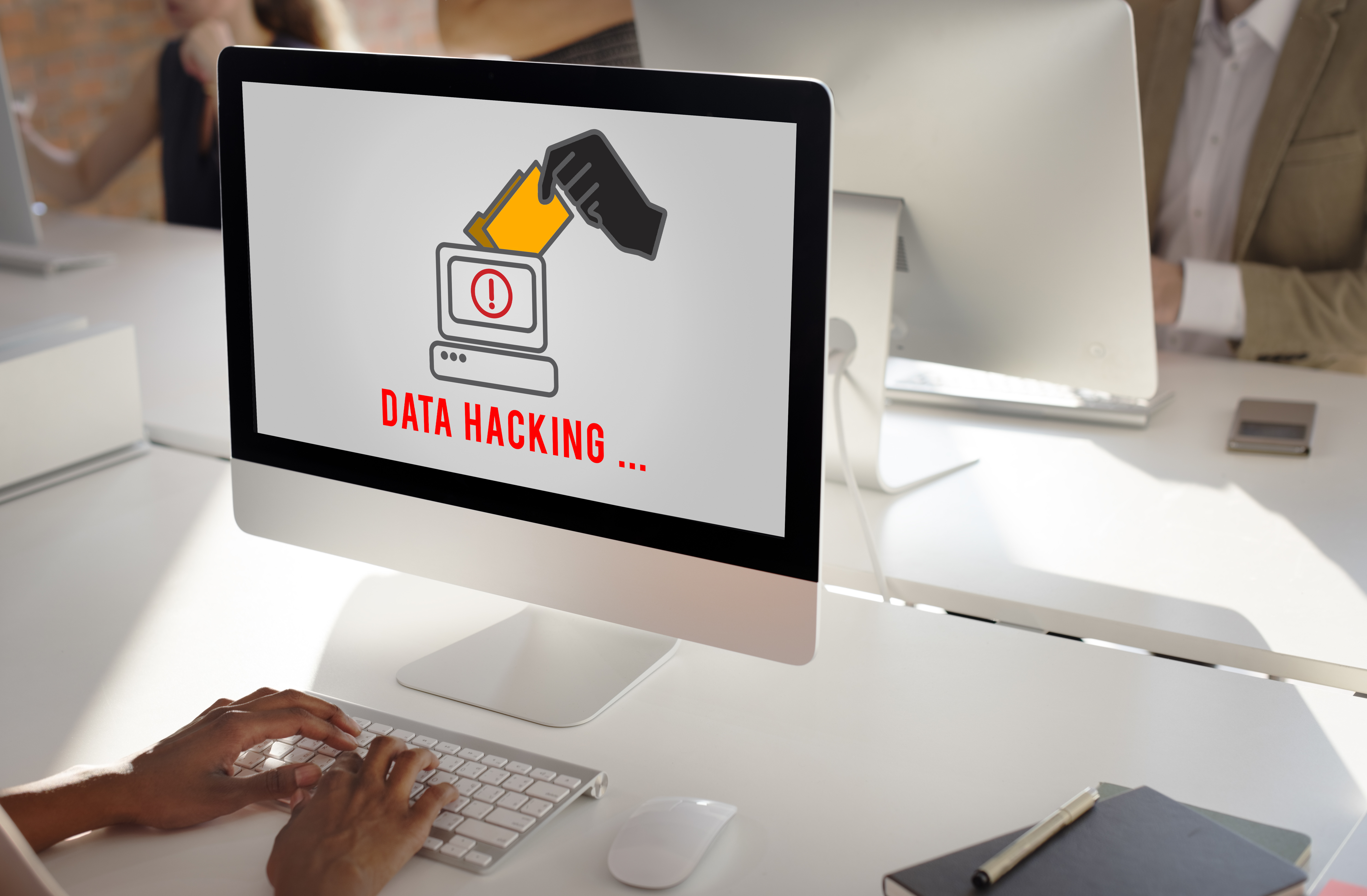
- Phishing and social engineering
How it works
Scammers send email, SMS, or chat that looks real. They ask for passwords or one-time codes. They link to fake pages that copy banks and stores. Signs: Urgent tone. Odd links. New numbers asking for codes. - Account takeover using saved cards
How it works
Attackers skip your bank and go straight to stores with saved payment methods. They buy digital goods or gift cards that settle fast. Signs: New devices in your login history. Password reset emails you did not start. - Card testing with tiny charges
How it works
Bots try small amounts, often one to five dollars, to see if a card is live. If it works once, they raise the amount. Signs : A burst of small authorizations within minutes. New merchants you do not know. - Subscription traps and silent renewals
How it works
A free trial flips to pay. The cancel path is hidden. Prices creep up over time. Signs:
Recurring billing from vendors you do not use. Price increases with no notice - Fake checkout pages and skimmers
How it works
Hacked sites load code that steals card data. Phishing pages copy real brands and capture your details. Signs: Typos in the URL. No padlock in the browser. Errors after clicking Pay. - Data breaches and credential stuffing
How it works
Leaked emails and passwords are tested across many sites. Reused passwords give attackers a free pass. Signs; Login alerts from new countries. MFA prompts you did not request. - Refund fraud and chargeback abuse
How it works
A fake support agent offers a refund, then moves funds to another account. Or a real buyer disputes a valid charge. Signs; Refunds you did not request. Support chats that push you to install remote tools.
What virtual card fraud looks like
Fraud happens when someone bills a virtual card without your consent. It also covers billing tricks that make you pay more than you agreed. Think trial offers that flip to paid, duplicate subscriptions, fake refunds, or “friendly” fraud from a shared account. Fraud is not only stolen numbers. It also includes billing tricks and account abuse.
What changes with virtual cards:
- You issue a new card in seconds
- You lock a card to one merchant
- You set strict daily and monthly limits
- You set an expiry date to match a trial or project
Credit Card Fraud Is Increasing Worldwide
Credit card fraud continues to rise as online shopping and digital payments grow globally. According to industry fraud reports, card-not-present fraud and phishing scams remain among the most common online payment threats affecting consumers and businesses.
- Card-not-present fraud accounts for a large percentage of online payment fraud.
- Phishing scams continue to target payment card users through fake checkout pages and emails.
- Subscription fraud and account takeover attacks are increasing across ecommerce platforms.
- Businesses lose billions annually due to payment fraud and unauthorized transactions.
Real Examples of Credit Card Fraud
Example 1 — Subscription Scam
A user signs up for a free trial using their primary card. Months later, hidden recurring charges appear. A virtual card with spending limits could have automatically blocked unauthorized renewals.
Example 2 — Card Testing Fraud
Fraudsters use stolen card details to make small test purchases before larger transactions. Disposable virtual cards reduce exposure because card numbers can be locked or deleted instantly.
Core Credit Card Fraud Protection to Implement

- Lock each card to one merchant : One card per vendor blocks cross-site abuse if a vendor is breached.
- Set hard limits: Add daily and monthly caps. Match them to real usage. Alerts fire when you near the limit.
- Keep 3D Secure on : Challenge high-risk payments. Many drive-by charges stop here.
- Auto-expire cards; End a card on the trial or project end date. Silent renewals fail cleanly.
- Turn on real-time alerts: Enable alerts for first charge at a merchant, cross-border charges, amount spikes, clusters of declines, and new device logins.
- Use strong login security: Multi-factor. Unique passwords. Device checks. Remove ex-users fast on shared accounts.
- Protect your devices: Keep phones and laptops updated. Use a PIN or biometric. Avoid public Wi-Fi for payments.
Extra guidance for media buyers
- Know the risk
Billing hits in bursts, thresholds fire, daily budgets reset. One blocked or shared card can stall many campaigns. Watch for spikes, retries, takeovers, fake support. - Set up right
One card per campaign or client. Lock the ad platform. Add weekly limits. Auto-expire at campaign end. Keep a backup card ready. - Catch issues fast
Alerts for first charge, rapid-fire charges, amounts >3× normal, new country or odd hours, and clusters of declines. - Close the loop
Match card logs to invoices. Export weekly with campaign tags. Use a refund playbook. With Bycard: issue instantly, lock to platforms, set caps, get real-time alerts, swap failed cards, and hand finance clean logs.
How Bycard Virtual Cards Help Prevent Fraud
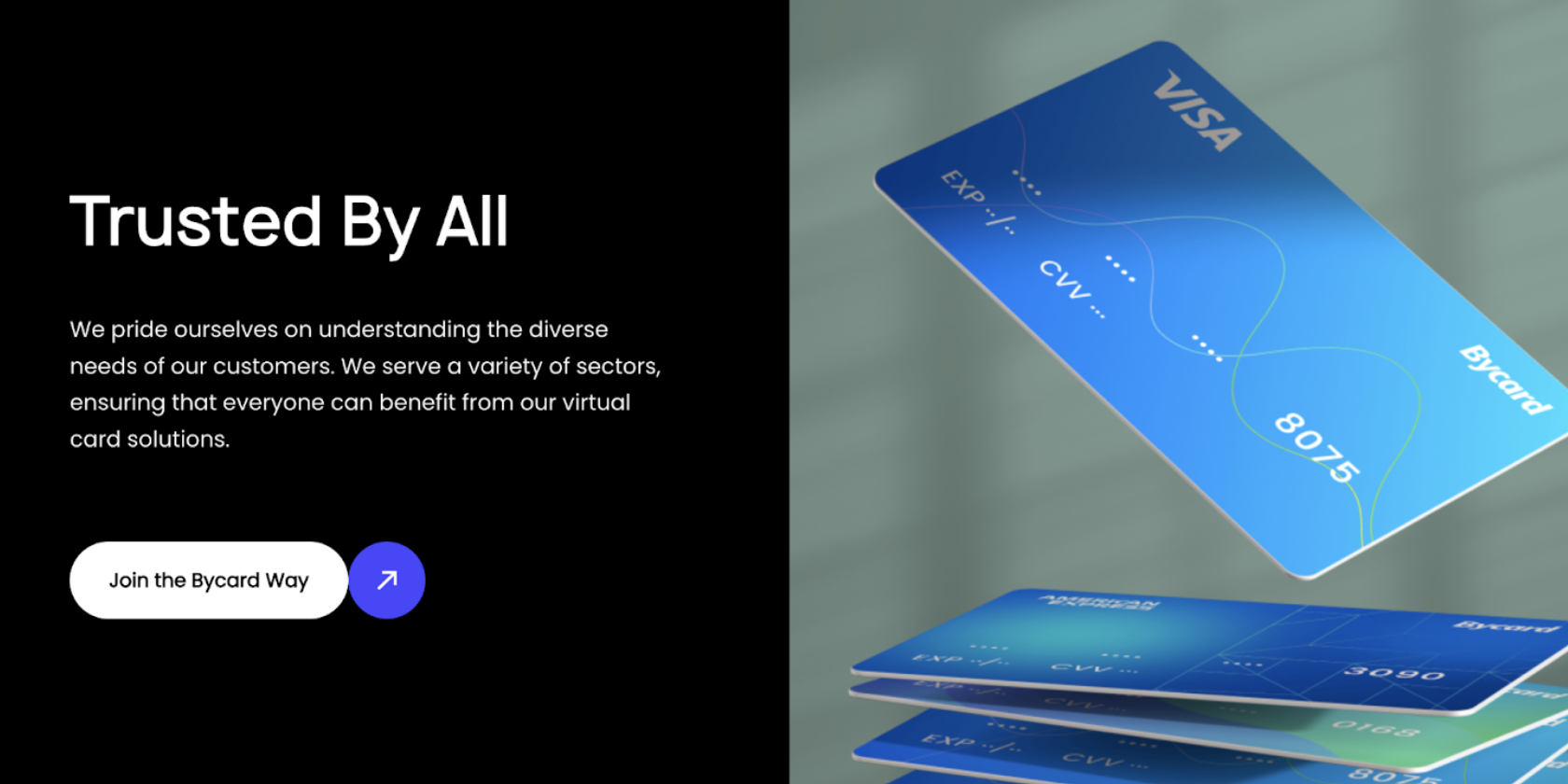
Bycard issues new cards in seconds, which provide advanced security controls designed to reduce online payment fraud risks. Users can generate unique card numbers for different merchants, set transaction limits, freeze cards instantly, and reduce exposure to phishing scams and unauthorized charges.
Reviewed by Bycard Security Team
The Bycard Security Team specializes in virtual card infrastructure, payment fraud prevention, online transaction security, and spend management solutions for businesses and individuals. The team researches emerging fraud trends, card testing attacks, phishing scams, and digital payment vulnerabilities to help users secure online transactions safely.
Conclusion
Virtual cards give you control. You choose who can bill, how much, and for how long. You get alerts that prompt fast action. You freeze and replace in seconds. Most fraud attempts fail when you lock each card to one merchant, set hard caps, keep multi-factor on, and review alerts. If you run ads, go further. Use a card per campaign, cap each week, and keep a backup ready. You will pay with confidence and keep your books clean.