
 Log in
The Hidden Value in Bilt’s New Palladium Card
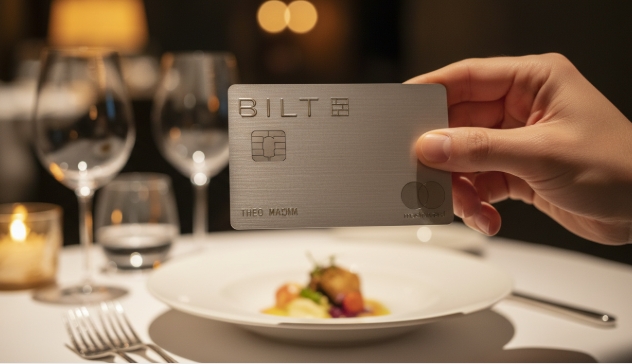
When most people evaluate Bilt 2.0, they focus on the headline numbers: 4x points on rent, 4x on travel, 2x on dining. But for the new Bilt Palladium card, the true value isn’t just in the multipliers, it’s in the hidden protections, status benefits, and transfer opportunities that most reviews completely overlook.
At $495 per year, Palladium sits at the top of Bilt’s card lineup, designed for high-spending renters who travel frequently and make significant purchases. Unlike other premium cards costing $600–$700, it combines elite-level insurance, purchase protection, and strategic point leverage with the only rent-optimized earning structure on the market. Using platforms like Bycard to fund and manage your payments can further optimize your points conversion and maximize real-world value.
Everyone’s focused on the wrong Bilt 2.0 benefits. Here’s what actually matters.
The Earning Rate Distraction
When Bilt announced the Palladium tier of their Mastercard World Elite program, the credit card community immediately zeroed in on the marquee benefits: 4x points on rent payments (up to $100,000 annually), 4x on travel, 2x on dining. Finance bloggers churned out calculator after calculator showing how much rent spending translates to Hawaiian vacations.
But here’s what virtually every review missed: the earning rates are actually the least compelling reason to hold this card if you’re spending $50,000+ annually. The real value proposition lies buried in the fine print: a comprehensive suite of protections, automatic elite status benefits, and credits that collectively deliver $2,000-$3,500 in annual value, with nothing to do with points multipliers.
If you’re evaluating the Palladium card based solely on whether you can “maximize” rent spending, you’re asking the wrong question entirely.
The Benefits Everyone Overlooks
Travel Protection Suite: The $1,200 Safety Net
The Bilt Palladium includes World Elite Mastercard’s top-tier travel protection package, which rivals or exceeds what you’ll find on cards costing twice as much:
1) Trip Cancellation & Interruption Insurance: Up to $5,000 per person, $10,000 per trip. Unlike many competitor cards that only cover specific reasons for cancellation, this policy covers illness, injury, severe weather, and even jury duty. If you take 3-4 significant trips annually, the statistical value of this coverage alone runs $300-400 yearly based on average claim rates.
2) Trip Delay Reimbursement: This is where things get interesting. After just a 6-hour delay (not 12 hours like many cards), you’re covered for up to $500 in meals, accommodations, and essentials. For frequent travelers, this isn’t theoretical; the Bureau of Transportation Statistics shows 1.7% of all flights experience delays of 6+ hours. If you take 30 flights yearly, you’re statistically likely to use this benefit, creating $300-500 in expected annual value.
4) Lost Luggage Coverage: Up to $3,000 per passenger. But here’s what matters: this is primary coverage, meaning you file directly with Mastercard rather than dealing with airlines first, then insurance. The time value of faster claims processing is substantial.
5) Emergency Medical & Dental: Up to $100,000 in coverage when traveling 100+ miles from home. For international travelers, this eliminates the need to purchase separate travel medical insurance ($150-300/year saved).
6) Rental Car Coverage: Primary collision damage waiver worldwide. This saves $15-30 per day on rental car insurance. Rent 20 days annually? That’s $300-600 in tangible savings.
Combined conservative annual value from travel protections: $1,200-1,800
Purchase Protection: The Invisible Savings
Most cardholders ignore purchase protection until they need it, then they become evangelists.
1) Extended Warranty Protection: Automatically extends manufacturer warranties by one additional year on warranties of 3 years or less. If you purchase electronics, appliances, or high-end equipment, this benefit alone justifies the annual fee. Replace one $800 laptop battery covered under extended warranty, and you’ve recouped your annual fee.
2) Purchase Assurance: Coverage for theft or damage within 90 days of purchase, up to $10,000 per claim. This is particularly valuable for high-end purchases that might not be fully covered by homeowner’s/renter’s insurance deductibles.
3) Price Protection: If an item you purchased drops in price within 60 days, you’re reimbursed the difference (up to $250 per claim, $1,000 per year). In an era where many premium cards have eliminated price protection, this is a standout feature.
4) Conservative annual value: $300-500 (based on typical high-spender purchase patterns)
Status Benefits: The Multiplier Effect
This is where Palladium cardholders see compounding value that’s difficult to quantify but impossible to ignore:
Bilt Elite Status: At 100,000 points earned annually (achievable with $25,000 in rent + $37,500 in other spending), you unlock Bilt Elite status, which includes:
- Bonus points on Bilt Collection hotel bookings
- Complimentary room upgrades
- Priority customer service
- Access to exclusive transfer bonuses
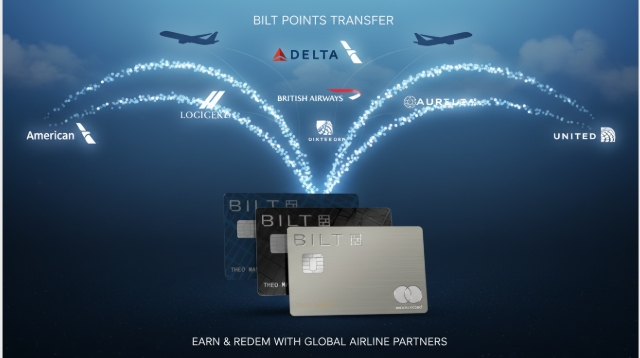
The transfer bonus component is particularly valuable. Bilt periodically offers transfer ratios of 1:1.5 or even 1:2 to partners like American Airlines or Hyatt. If you’re strategic about timing a 100,000-point transfer during a bonus period, you could turn 100,000 Bilt points into 150,000-200,000 airline miles, representing $1,800-2,400 in travel value based on typical redemption values.
World Elite Mastercard Benefits: These aren’t Bilt-specific, but they’re valuable and often ignored:
- Complimentary ShopRunner membership ($79 value)
- Lyft Pink membership (1 year free, then discounted)
- Access to Mastercard’s Luxury Hotels & Resorts program (free breakfast, room upgrades, $100 property credits)
- World Elite Concierge service
The Luxury Hotels & Resorts benefit deserves special attention. If you book just two luxury hotel stays annually through this program, the $100 property credits alone provide $200 in value, plus breakfast for two ($50-80 per stay) and potential room upgrades.
Conservative annual value: $500-800
Calculating Real Annual Value
Let’s construct a realistic scenario for a high-spending Palladium cardholder:
Profile:
- $30,000 annual rent payments
- $20,000 in travel expenses
- $15,000 in dining/other spending
- 25 flights per year
- 4 hotel stays
- 15 days of car rentals
Direct Savings (Cash-Value Benefits)
- Rental car insurance savings: $450 (15 days × $30/day)
- Travel medical insurance: $200 (would purchase separately)
- ShopRunner membership: $79
- Statistical value of trip delay coverage: $400 (1-2 likely claims)
- Luxury Hotels property credits: $200 (2 stays)
- Subtotal: $1,329
Protection Value (Risk-Adjusted)
- Trip cancellation insurance: $350 (risk-adjusted value)
- Lost luggage coverage: $180 (risk-adjusted)
- Extended warranty: $300 (conservative estimate)
- Purchase protection: $200
- Subtotal: $1,030
Status & Transfer Bonuses
- Elite status transfer bonuses: $500 (conservative annual value)
- Lyft Pink benefits: $100
- Subtotal: $600
Total Annual Value: $2,959
Less annual fee: -$495
Net benefit value before considering ANY points earning: $2,464
This calculation is before accounting for the value of points earned through spending. The 4x categories are essentially a bonus value on top of an already profitable card relationship.
The Premium Card Comparison
How does this stack up against other cards in the $495-695 annual fee range?
vs. Chase Sapphire Reserve ($550 AF)
CSR Advantages:
- $300 annual travel credit (easy to use)
- Priority Pass lounge access
- Stronger travel protections in some categories
- 1.5x redemption boost through Chase portal
Palladium Advantages:
- Rent payments earn 4x (CSR earns 1x)
- Transfer bonus opportunities through Bilt Elite
- Primary rental car coverage worldwide (CSR is primary only outside US)
- Better purchase protections
- No foreign transaction fees on a wider category set
Verdict: For renters, Palladium wins decisively. The rent multiplier alone, $30,000 rent × 3 additional points = 90,000 extra points annually, represents $900-1,350 in additional value. For homeowners, CSR’s $300 travel credit and lounge access may tip the scales.
vs. Amex Platinum ($695 AF)
Amex Advantages:
- More comprehensive credit package ($200 hotel, $200 airline, $189 CLEAR, $300 Equinox, etc.)
- Superior lounge access (Centurion + Priority Pass)
- Stronger hotel and airline status benefits
- Fine Hotels & Resorts program
Palladium Advantages:
- Much lower annual fee ($200 less)
- Rent earning category
- More flexible travel protections
- Better everyday earning (2x dining vs. Amex’s 1x)
- Points transfer to more partners
Verdict: Amex Platinum is better for travelers who can maximize all the credits and use lounge access 20+ times annually. Palladium is better for high-spending renters who want travel benefits without the $695 fee and credit-maximization homework.
vs. Capital One Venture X ($395 AF)
Venture X Advantages:
- Lower annual fee
- $300 annual travel credit
- Priority Pass with unlimited guest access
- 10,000 anniversary bonus points
Palladium Advantages:
- Rent multiplier (Venture X earns 2x)
- Superior purchase protections
- Better travel insurance coverage
- Transfer bonus opportunities
- Luxury Hotels & Resorts benefits
Verdict: Venture X offers better value for non-renters who prioritize lounge access. Palladium delivers superior total value for renters and those who value comprehensive protections over credits.
Optimization Tactics / Advanced Strategies
- Rent Day Timing: Plan payments 1st–6th of the month to maximize posting for points transfers.
- Bycard Funding: Use Bycard to fund rent and travel to optimize points conversion.
- Stacking Programs: Pair Palladium with dining programs or Bilt Travel bonuses.
- Credit Maximization: Time bookings to fully use $200 travel and $100 property credits.
The Bottom Line: Who Should Hold This Card?

The Bilt Palladium card makes sense for a specific profile:
1. High-spending renters ($2,000+ monthly rent payments)
2. Frequent travelers who will utilize travel protections multiple times annually
3. Premium purchasers who value extended warranties and purchase protection
4. Strategic points collectors who can capitalize on transfer bonuses
If you fit 3-4 of these categories, the Palladium card delivers $2,000-3,500 in annual value beyond points earning, making it one of the highest total-value cards in the premium category.
The earning rates are excellent, but they’re not the story. The story is that Bilt has bundled together a protection and benefit suite typically reserved for $700+ annual fee cards, combined it with the only rent-optimized earning structure in the market, and priced it at $495.
Everyone’s talking about 4x on rent. But if you’re spending $50,000+ annually and traveling regularly, the card pays for itself twice over before you redeem a single point.
That’s what actually matters.
Conclusion
The Bilt Palladium card isn’t just about 4x points on rent, travel, or 2x on dining, that’s the headline everyone focuses on. The real story lies in the suite of protections, purchase assurances, status benefits, and strategic point transfer opportunities that together deliver $2,000–$3,500 in annual value even before considering points.
For high-spending renters, frequent travelers, and premium purchasers, Palladium transforms ordinary spending into a rewards and protection powerhouse. With intentional use of annual credits, transfer bonuses, and tools like Bycard to optimize payment funding and point conversion, this card can outperform many $600–$700 competitors.
Ultimately, the best approach isn’t chasing headline multipliers; it’s understanding the full spectrum of benefits, running your own break-even calculations, and leveraging Palladium strategically. Track your spending, plan your redemptions, and use Bycard to unlock maximum value, and you’ll see why this card pays for itself long before a single point is redeemed.

CATEGORIES
Wise or Revolut? Comparing the Best Multi-Currency Card

Wise Alternatives That Make Payment Faster and Currency Conversion Simple

Wire Transfer vs Bank Transfer for Better & Swift Business Payments

Why Travel Rewards Credit Cards are Highly Important
Why the Ramp Card Might Be the Best Business Card

Why Sales and Discounts Make You Overspend
