
 Log in
The Concept of Payment Tokenization and How It Works
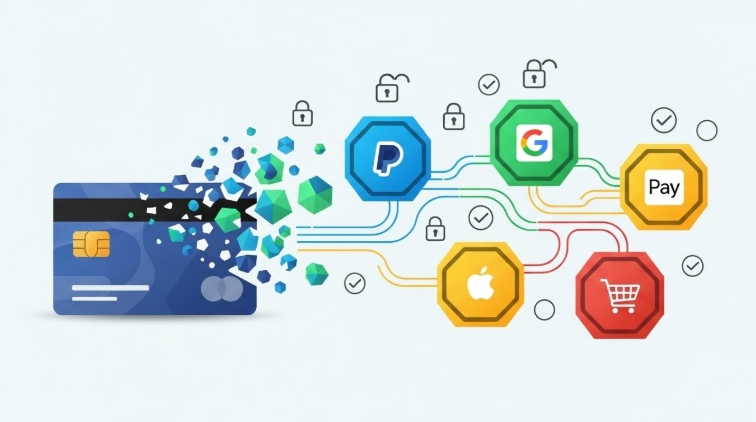
Payment tokenization has transformed how digital payments are processed, making transactions secure and efficient. Payments today happen in seconds, but the systems behind them are far more complex than they appear. Each card transaction passes through multiple platforms, security checks, and approval layers before completion. As digital payments expand across websites, mobile apps, and subscriptions, protecting card data without slowing transactions has become a growing challenge.
By replacing raw card details with secure substitute values, tokenization keeps payments moving quickly while limiting where sensitive information is handled. Many modern transactions no longer involve actual card numbers at all.
- The Concept of Payment Tokenization and How It Works
- What Is Payment Tokenization?
- Why Payment Tokenization Is Becoming Standard Across Modern Payments
- How Payment Tokenization Works in a Real Transaction
- Payment Tokenization vs Encryption: Understanding the Difference
- Types of Payment Tokenization Used Today
- Key Features of Traditional Banking:
- How Payment Tokenization Reduces Fraud and Improves Approval Rates
- Integrating Payment Tokenization with Virtual Cards
- How Bycard Uses Tokenization and Virtual Cards to Improve Payments
- Payment Tokenization and PCI Compliance
- Limitations and Challenges of Payment Tokenization
What Is Payment Tokenization?
Payment tokenization is a security mechanism that replaces sensitive payment data, like a card’s primary account number (PAN), with a unique token that has no meaningful value outside its original context.
This token:
- Is useless to attackers if intercepted
- Protects card information from exposure
- Allows merchants to operate without storing real card details
In a tokenized payment flow, the actual card information is stored securely in a protected environment, while the token is used for authorization and recurring charges.
Why Payment Tokenization Is Becoming Standard Across Modern Payments
Digital payment behavior has shifted in recent years, with one-click checkouts, saved cards, subscriptions, and mobile wallets driving a growing share of transactions. These use cases rely on securely reusing payment credentials, something traditional methods struggle to handle without added risk.
Tokens are tied to specific merchants, devices, or contexts, which makes them less risky than raw card data. As a result, networks, payment service providers, and platforms increasingly rely on payment tokenization as a standard security layer. Tokenized payments can also see higher authorization rates, as issuers recognize them as more controlled. Digital wallets and virtual cards have reinforced this shift by using device-bound tokens instead of actual card numbers.
How Payment Tokenization Works in a Real Transaction
Understanding payment tokenization is easiest when you follow the lifecycle of a typical payment.
- Card Data Entry: A customer enters card details online, in an app, or via a point-of-sale terminal.
- Token Request: The payment system sends the real card information securely to a tokenization service.
- Token Issuance: A unique token replaces the card number for use in the transaction.
- Secure Storage: The real card number is stored safely in a token vault managed by the processor.
- Token Use: The token is used for authorizations, chargebacks, refunds, and recurring billing tasks.
Payment Tokenization vs Encryption: Understanding the Difference
Though often mentioned together, payment tokenization and encryption are distinct.
Encryption scrambles card data using algorithms and keys. If someone obtains both the encrypted data and the decryption key, the original information could be recovered.
Payment tokenization, however:
- Replaces data with meaningless tokens
- Has no decryption path back to the original PAN
- Keeps sensitive information out of merchant systems
Many payment platforms use encryption for in-transit security and payment tokenization for storage and transaction reuse, combining both for effective protection.
Types of Payment Tokenization Used Today
Different applications require specific tokenization approaches:
Network Tokenization
Managed by card networks (like Visa or Mastercard), these tokens often link to a specific device or merchant and are automatically updated when cards expire.
Gateway Tokenization
Provided by payment processors, these tokens help merchants securely store payment credentials for subscriptions, repeat purchases, and internal workflows.
Device Tokenization
Used in mobile wallets and digital payment apps, where tokens are tied to individual devices for enhanced security.
Each type supports payment tokenization in different environments, but all share the same goal: minimizing real card data exposure.
Key Features of Traditional Banking:
- Physical Branches: Customers can visit bank branches for various financial transactions.
- Face-to-Face Interaction: Customers can visit bank branches for various financial transactions.
- Paper-Based Transactions: Many processes require physical paperwork, such as loan applications and account openings.
- Physical branches. Customers can visit bank branches for various financial transactions.

Perfect Card for running ads!
How Payment Tokenization Reduces Fraud and Improves Approval Rates
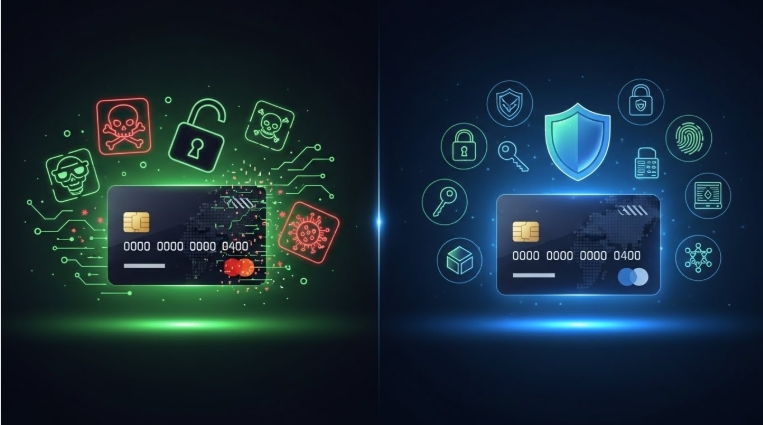
One of the most practical benefits of payment tokenization is its ability to reduce fraud:
- Tokens cannot be reused across merchants or outside of their issuance context.
- Even if tokens are compromised, they are worthless to attackers.
- Fraud detection systems can focus on transaction patterns rather than sensitive data.
Tokenized transactions often enjoy better authorization performance because card networks and issuers can trust the context in which tokens are used. This means fewer declines and smoother customer experiences.
Integrating Payment Tokenization with Virtual Cards
Tokenization plays especially well with modern payment innovations like virtual cards. Platforms that issue virtual cards leverage tokenization not just for security, but for control, segmentation, and spend management. Tokens allow businesses to create unique identifiers for different budgets, campaigns, or vendors, each isolated from the others, so a breach in one area doesn’t compromise others.
This approach is particularly useful for agencies, small businesses, and teams managing multiple projects simultaneously.
How Bycard Uses Tokenization and Virtual Cards to Improve Payments
Bycard issues virtual cards instantly, allowing users to:
- Generate cards tailored to specific purposes (e.g., vendor bills, ad campaigns)
- Set per-card spending limits and controls
- Lock or unlock cards instantly
- Manage budgets and reconcile spending in real time
Bycard’s virtual cards use secure placeholders that minimize fraud risk and isolate payment exposure for each use case.
Bycard Features That Amplify Tokenization Benefits
- Virtual credit cards for everyday bills and online transactions
- Crypto payment support allowing funding with USDT or traditional currencies
- Budget management dashboards for real-time control
- Receipt, expense, and reconciliation tools for organized reporting
- Bill pay solutions that let users manage recurring payments easily
These features not only simplify spending but also reinforce security by keeping payment credentials compartmentalized and controlled.
Use Cases Where Tokenization and Bycard Shine
Agency and Media Buying Payments
Modern ad platforms (like Facebook, Google, TikTok) require precise budget control and traceability. Bycard allows agencies to generate unique virtual cards for each campaign, isolating risk and reducing the likelihood of declines due to high exposure.
Subscription Billing and Recurring Services
Subscription-based services benefit from token reuse without ever storing raw card details, improving retention while keeping compliance overhead low.
Global Payments and Multi-Currency Spend
Bycard supports multi-currency transactions and top-ups with crypto, enabling teams to manage international payments without traditional banking delays or risks.
Payment Tokenization and PCI Compliance
Handling raw card data increases compliance obligations, especially under PCI DSS. Tokenization helps reduce this burden by keeping sensitive information out of merchant systems:
- Reduces PCI scope for merchants
- Limits where and when card data is exposed
- Simplifies audit and reporting requirements
While payment tokenization doesn’t eliminate compliance needs, it makes them more manageable.
Limitations and Challenges of Payment Tokenization
- Tokens may not transfer easily between payment platforms
- Switching payment processors can require re-tokenizing stored credentials
- Businesses may become reliant on a single provider’s token ecosystem
However, for most organizations, these trade-offs are small compared to the improvements in security and operational clarity.
Perfect Card for running ads!
Conclusion
Payment tokenization has become a pillar of modern payments because it balances security with practicality. It protects sensitive data without slowing workflows, enables innovation like virtual cards, and enhances authorization performance.
Platforms like Bycard build on tokenization principles to deliver practical payment tools that meet today’s business needs, from secure spend management to global bill pay solutions.

CATEGORIES
Wise or Revolut? Comparing the Best Multi-Currency Card
Wise Alternatives That Make Payment Faster and Currency Conversion Simple
Wire Transfer vs Bank Transfer for Better & Swift Business Payments

Why Travel Rewards Credit Cards are Highly Important
Why the Ramp Card Might Be the Best Business Card

Why Sales and Discounts Make You Overspend
