
 Log in
Why Industrial-Scale Fraud Needs AI-Protection
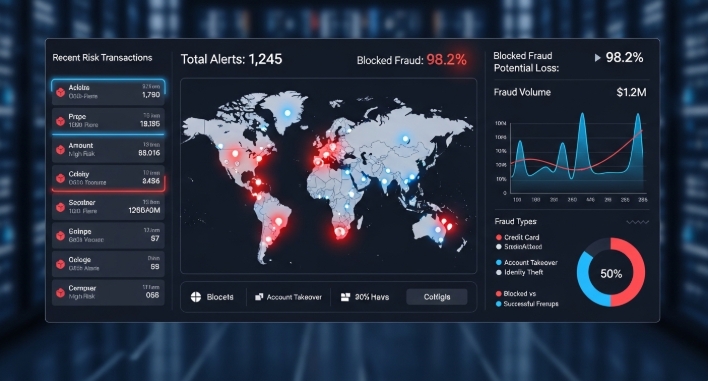
Fraud isn’t what it used to be. It’s no longer a handful of bad actors testing stolen cards or sending obvious phishing emails. Today, fraud operates at an industrial scale, automated, coordinated, and constantly evolving.
For businesses handling payments, digital assets, or customer data, this shift changes everything. Traditional defenses can’t keep up. What’s needed now is AI-Protection, systems designed to detect, prevent, and adapt to fraud in real time.
- Why Industrial-Scale Fraud Needs AI-Protection
- The Shift to Industrial-Scale Fraud
- Why Traditional Fraud Prevention Falls Short
- What AI-Protection Actually Means
- Key Use Cases for AI-Protection
- The Data Advantage: Why AI Wins at Scale
- Practical Benefits for Businesses
- Where AI-Protection Fits in Payment Infrastructure
- How Bycard Supports AI-Protection at Scale
- Implementing AI-Protection: What to Look For
The Shift to Industrial-Scale Fraud
From Individual Attacks to Organized Systems
Fraud has evolved into a structured operation. Instead of isolated attempts, fraudsters now use:
- Automated bots to test thousands of cards per minute
- Large datasets of stolen credentials
- Distributed networks to mask activity
This means attacks are no longer random, they’re systematic and continuous.
The Role of Automation in Fraud Growth
Automation is the backbone of modern fraud. Tools can now:
- Generate synthetic identities
- Launch coordinated payment attacks
- Adapt quickly when detection patterns change
The result? Fraud attempts scale faster than most manual or rule-based systems can respond.
Why Traditional Fraud Prevention Falls Short
Static Rules Can’t Keep Up
Rule-based systems rely on predefined conditions like:
- Flagging transactions above a certain amount
- Blocking activity from specific locations
But fraudsters adapt quickly. Once they understand the rules, they simply work around them.
High False Positives Hurt Revenue
Blocking fraud is important, but blocking real customers is costly.
Common issues include:
- Legitimate transactions declined
- Friction during checkout
- Lost customer trust
This creates a trade-off between security and user experience, one that businesses struggle to balance.
Limited Visibility Across Systems
Fraud doesn’t happen in one place. It spans:
- Payments
- Accounts
- Devices
- Networks
Traditional tools often operate in silos, making it hard to detect patterns across the full user journey.
What AI-Protection Actually Means
AI-Protection goes beyond basic automation. It uses machine learning and real-time data analysis to identify suspicious behavior as it happens.
Continuous Learning and Adaptation
Unlike static systems, AI models:
- Learn from new data continuously
- Adjust to emerging fraud patterns
- Improve detection accuracy over time
This makes them far more resilient against evolving threats.
Behavioral Analysis Instead of Fixed Rules
AI-Protection focuses on how users behave, not just what they do.
Examples include:
- Typing speed and interaction patterns
- Device and browser behavior
- Transaction timing and frequency
By analyzing behavior, AI can detect anomalies that rules would miss.
Real-Time Decision Making
Speed matters. AI systems can:
- Approve or decline transactions instantly
- Trigger additional verification when needed
- Stop fraud before it impacts users
This reduces both financial loss and operational overhead.
Key Use Cases for AI-Protection
Payment Fraud Detection
AI can analyze transaction data in real time to detect:
- Card testing attacks
- Unusual spending patterns
- Cross-border anomalies
This is especially critical for platforms handling high transaction volumes, such as businesses issuing virtual cards or enabling global payments, where fraud attempts tend to scale rapidly.
Account Takeover Prevention
AI-Protection helps identify suspicious login activity by monitoring:
- Location changes
- Device switching
- Login behavior anomalies
This reduces the risk of unauthorized access and downstream fraud, especially for fintech platforms and payment providers managing user wallets and card access.
Synthetic Identity Detection
Fraudsters increasingly use fake identities built from real and fabricated data.
AI models can:
- Identify inconsistencies across datasets
- Detect patterns typical of synthetic profiles
- Flag high-risk accounts early
Merchant and Platform Risk Scoring
AI can assign risk scores to users, transactions, or merchants based on:
- Historical behavior
- Network activity
- Transaction patterns
This allows businesses to prioritize reviews and automate decisions.
The Data Advantage: Why AI Wins at Scale

AI-Protection thrives on data. The more data it processes, the better it performs.
Types of Data Used
- Transaction history
- Device fingerprints
- Geolocation data
- User behavior signals
Turning Data Into Action
AI systems don’t just collect data; they connect it.
For example:
- A single transaction might look normal
- But combined with device and behavior data, it may signal fraud
This layered analysis is what makes AI effective at scale, especially in payment ecosystems where transaction velocity and diversity are high.
Practical Benefits for Businesses
Reduced Fraud Losses
AI identifies threats earlier, reducing:
- Chargebacks
- Financial losses
- Operational costs
Better Customer Experience
With fewer false declines:
- Customers complete transactions easily
- Checkout friction is reduced
- Trust improves over time
Operational Efficiency
AI automates:
- Transaction monitoring
- Risk assessment
- Decision-making processes
This frees up teams to focus on high-priority cases.
Where AI-Protection Fits in Payment Infrastructure
AI-Protection isn’t a standalone feature, it’s part of a broader payment and security stack.
Integration with Payment Systems
Modern platforms integrate AI into:
- Payment gateways
- Virtual card issuance
- Fraud monitoring tools
This ensures protection is embedded directly into transaction flows rather than added as an afterthought.
This is where infrastructure providers like Bycard play a critical role. Instead of layering fraud prevention on top of payments, Bycard builds it directly into how transactions are created, processed, and controlled.
For example, with virtual card issuance, businesses can define how cards are used from the start, setting spend limits, restricting merchants, and controlling transaction behavior in real time. When combined with AI-Protection, these controls become even more effective, as risk signals can instantly influence how transactions are approved or declined.
Bycard also supports real-time transaction visibility and API-driven integrations, allowing AI systems to plug directly into payment flows. This means businesses don’t just detect fraud, they can act on it immediately within the same infrastructure.
How Bycard Supports AI-Protection at Scale
As fraud becomes more sophisticated, infrastructure matters just as much as detection. This is where platforms like Bycard come in.
Bycard provides payment infrastructure built for businesses operating at scale, especially those issuing virtual cards, handling global transactions, or managing high-volume payouts.
Built-In Risk Control for Virtual Cards
Virtual cards are a major target for fraud, particularly through:
- Card testing attacks
- Unauthorized transactions
- Merchant abuse
Bycard addresses this by enabling:
- Controlled card issuance
- Spend limits and merchant restrictions
- Real-time transaction visibility
These controls reduce exposure before fraud even happens.
Real-Time Transaction Monitoring
Speed is critical in fraud prevention. Bycard’s infrastructure supports:
- Instant transaction tracking
- Real-time approval or decline flows
- Dynamic controls on card usage
This aligns directly with AI-Protection systems that rely on immediate data and action.
Global Payment Coverage with Risk Awareness
Cross-border payments introduce additional risk layers, including:
- Currency differences
- Regional fraud patterns
- Regulatory requirements
Bycard supports global transactions while maintaining structured oversight, helping businesses scale without losing control over risk exposure.
Flexible Integration for AI-Driven Systems
AI-Protection works best when it can plug directly into payment infrastructure.
Bycard enables:
- API-based integration
- Compatibility with fraud detection tools
- Customizable workflows for transaction control
This allows businesses to combine AI intelligence with execution, turning insights into immediate action.
Implementing AI-Protection: What to Look For
Not all AI solutions are equal. While many tools claim to use AI, the real difference lies in how effectively they operate in live environments. For businesses dealing with payments and user data, choosing the right AI-Protection setup can directly impact fraud rates, customer experience, and operational efficiency. Instead of focusing on buzzwords, it’s important to evaluate how the system performs across speed, data usage, learning ability, and how well it fits into your existing infrastructure.
Real-Time Capabilities
Speed is one of the most important factors in fraud prevention. An effective AI-Protection system should be able to detect suspicious activity and respond instantly, not minutes or hours later. Fraud happens in real time, so delays in detection can lead to financial losses or unauthorized transactions going through.
Look for systems that can approve, decline, or flag transactions as they happen. Real-time decision-making also allows for dynamic responses, such as triggering additional verification steps only when necessary, helping to reduce friction for legitimate users.
Data Coverage
AI is only as effective as the data it can access and analyze. A strong AI-Protection system should pull signals from multiple points across the user journey, not just transactions alone. This includes device data, location, behavior patterns, and historical activity.
The ability to connect these data points is what enables accurate fraud detection. For example, a transaction might seem normal in isolation, but when combined with unusual device behavior or location changes, it could signal risk. Broader data coverage leads to better context and fewer blind spots.
Adaptability
Fraud tactics change constantly, which means your protection system needs to evolve just as quickly. AI-Protection should not rely on fixed rules alone but should continuously learn from new data, patterns, and attempted attacks.
An adaptable system improves over time, becoming more accurate as it processes more transactions and outcomes. This reduces the need for constant manual updates and ensures that emerging fraud techniques are identified early, rather than after they’ve already caused damage.
Integration Flexibility
Even the most advanced AI system won’t be effective if it doesn’t fit into your existing setup. Integration flexibility is key, especially for businesses managing payment gateways, virtual cards, or global transactions.
Look for solutions that offer API-based integration and can connect easily with your current payment infrastructure. This ensures that AI insights can be acted on immediately within your transaction flow, rather than sitting in a separate system. A well-integrated setup allows fraud detection and payment execution to work together seamlessly.

Perfect Card for running ads!
Conclusion
Industrial-scale fraud isn’t slowing down. It’s becoming more automated, more coordinated, and harder to detect.
Relying on traditional methods is no longer enough.
AI-Protection offers a way forward, one that matches the speed and scale of modern fraud while maintaining a strong user experience.
When combined with robust payment infrastructure like Bycard, businesses can move beyond reactive fraud prevention and build systems that are proactive, adaptive, and built for scale.
For businesses operating in today’s digital economy, it’s not just about preventing fraud. It’s about building systems that can adapt, learn, and protect at scale.

CATEGORIES
Wise or Revolut? Comparing the Best Multi-Currency Card

Wise Alternatives That Make Payment Faster and Currency Conversion Simple

Wire Transfer vs Bank Transfer for Better & Swift Business Payments

Why Travel Rewards Credit Cards are Highly Important

Why the Ramp Card Might Be the Best Business Card

Why Sales and Discounts Make You Overspend
