
 Log in
How to Use Virtual Card Limits to Control Daily Ad Spend

Controlling daily ad spend is one of the biggest challenges advertisers face. Even when budgets are carefully planned and platform limits are set, spending can quickly exceed expectations. Ad platforms optimize delivery to achieve campaign goals, which sometimes pushes daily spend higher than intended.
Virtual card limits provide a practical solution by enforcing spending caps at the payment level. With virtual cards, your ad spend stops automatically when the limit is reached, giving you control without constant monitoring.
- How to Use Virtual Card Limits to Control Daily Ad Spend
- Why Daily Advertising Spend Is Hard to Control Using Platform Budgets Alone
- How Virtual Card Limits Enforce Ad Spend at the Payment Level
- Setting Daily Spend Limits That Cannot Be Crossed
- Using Separate Virtual Cards to Isolate Ad Spend by Platform
- Segmenting Ad Spend by Campaign Type
- Improving Advertising Spend Forecasting and Cash Flow Planning
- Reducing Waste and Unexpected Spikes
- Managing Client Campaign Spend with Clear Boundaries
- How Bycard Helps with Campaign-Level Spend Strategies
- Advanced Controls That Strengthen Ad Spend Discipline
- Platform-Imposed Limits and What They Mean for Campaign Spend Planning
Why Daily Advertising Spend Is Hard to Control Using Platform Budgets Alone
Most ad platforms allow slight overspending on daily budgets. Google Ads, Meta, TikTok, and others openly state that they may exceed your daily limit to balance delivery across the week.
In practice, this means:
- A $50 daily spend can turn into $60 or $65
- Multiple campaigns can overspend on the same day
- High-traffic periods trigger unexpected spend spikes
The problem isn’t poor planning. It’s that daily ads spend limits inside ad platforms are not hard stops. They are pacing guidelines.
When advertisers rely only on platform settings, they’re trusting algorithms to respect budgets that were never meant to be enforced strictly.
How Virtual Card Limits Enforce Ad Spend at the Payment Level
Virtual cards allow you to define exactly how much money can be charged within a set period. When that limit is reached, further charges are declined.
This changes how ads spend behaves:
- The platform can attempt to charge more
- The card refuses the transaction
- Ads pause automatically
Instead of monitoring dashboards all day, your spend is capped by design. There is no manual intervention required.
This is why experienced media buyers treat virtual card limits as a second layer of control, not a replacement for platform budgets.
Setting Daily Spend Limits That Cannot Be Crossed
The most common setup is simple: match your virtual card daily limit to your planned daily ad spend.
Example:
- Planned daily spend: $40
- Virtual card daily limit: $40
Once $40 is charged, spending stops. There’s no opportunity for overshoot.
This method is especially effective during:
- Campaign launches
- Testing phases
- Budget-sensitive promotions
It turns daily spend from an estimate into a fixed boundary.
Using Separate Virtual Cards to Isolate Ad Spend by Platform
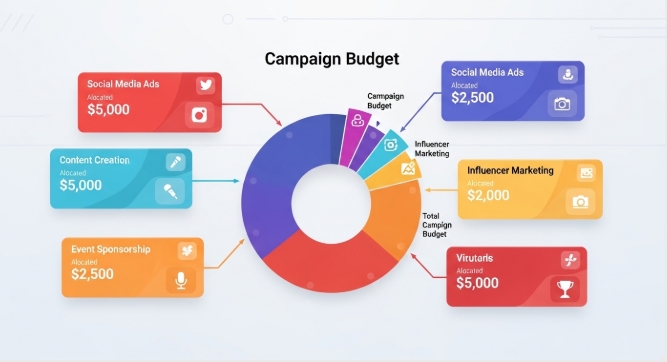
One reason advertising spend becomes difficult to track is when multiple platforms charge the same card. A single billing source hides where money is actually going.
A cleaner structure looks like this:
- One virtual card for Google Ads
- One virtual card for Meta Ads
- One virtual card for TikTok Ads
Each card has its own limit and transaction history. This setup improves:
- Visibility into daily ad Spend
- Error detection
- Budget accountability
If one platform runs into billing issues or hits its limit, the rest of your ads spend continues unaffected.
Segmenting Ad Spend by Campaign Type
Not all campaigns deserve the same level of financial freedom. Testing campaigns, retargeting, and core conversion campaigns all behave differently.
Virtual cards allow you to segment spend by intent:
- Low-limit cards for experiments
- Medium-limit cards for retargeting
- Higher-limit cards for proven campaigns
If a test campaign underperforms or malfunctions, its ad spend stops automatically without touching the rest of your budget.
This structure reduces risk while keeping successful campaigns running.
Improving Advertising Spend Forecasting and Cash Flow Planning
Forecasting fails when actual advertising spend doesn’t match planned spend. Virtual card limits close that gap.
When daily limits are enforced externally:
- Monthly spend becomes predictable
- Cash flow planning improves
- Budget reviews become faster
For example, a $30 daily advertising spend cap creates a predictable monthly range of roughly $900 to $930. That level of accuracy is difficult to achieve using platform controls alone.

Perfect Card for running ads!

Reducing Waste and Unexpected Spikes
Virtual card limits act as a safety net during:
- Platform billing glitches
- Duplicate campaign launches
- Traffic surges
- Team mistakes
Instead of discovering the issue after spend is gone, the card limit stops the damage early.
This protection matters most when ads run unattended overnight or across multiple time zones.
Managing Client Campaign Spend with Clear Boundaries
For agencies and freelancers, uncontrolled advertising spend creates trust issues. Clients expect predictability.
Virtual card limits allow you to say:
- This is the maximum daily spend
- It cannot be exceeded
- Billing aligns with what was agreed
This removes ambiguity and protects both the advertiser and the client from platform-driven overspending.
How Bycard Helps with Campaign-Level Spend Strategies
Bycard lets you issue instant virtual credits that function like traditional Visa or Mastercard cards but with more control over spending. It also offers campaign-specific virtual credit card solutions for major ad networks:
- Google Ads
- Facebook Ads
- TikTok Ads
- Bing Ads
- Snapchat, Taboola, LinkedIn, and more
Benefits include:
- Isolated campaign spend
- Billing errors on one channel don’t affect others
- Clear visibility for finance and media teams
- Faster and cleaner reconciliation
- Enforceable budget control without relying on platform limits
Why Bycard Matters for Daily Ad Spend Planning
Bycard ensures that daily ad Spend is predictable and controlled. With each card’s transaction history tracked and documented, advertisers can:
- Compare planned vs. actual daily spend
- Identify campaigns that underperform or overspend
- Allocate budgets accurately for the next cycle
- Avoid surprise fees or conversion errors
In essence, Bycard makes advertising spend control operational rather than manual, allowing teams to optimize performance without budget uncertainty.
Advanced Controls That Strengthen Ad Spend Discipline
Some virtual card providers offer additional controls that improve spend management:
- Merchant-restricted cards that only work on specific ad platforms
- Real-time transaction alerts
- Exportable spend logs for reconciliation
- Multi-currency support to reduce FX errors
These features help teams track ad spend accurately and respond faster when performance changes.
Platform-Imposed Limits and What They Mean for Campaign Spend Planning
It’s important to note that ad platforms sometimes impose their own spending caps based on account history or risk signals.
This means:
- Your card limit may allow higher spend
- The platform may still restrict delivery
Understanding both sides of control helps advertisers plan realistic daily ad spend expectations.
Conclusion
Daily Ad Spend doesn’t have to feel uncertain or stressful. Virtual card limits give advertisers a practical way to enforce boundaries without constant monitoring.By controlling Ad Spend at the payment level, you protect budgets, improve forecasting, and reduce waste while still allowing platforms to optimize delivery.
For anyone serious about running ads responsibly, virtual card limits, especially with a platform like Bycard, are less about restriction and more about control where it actually matters.

CATEGORIES
Wise or Revolut? Comparing the Best Multi-Currency Card

Wise Alternatives That Make Payment Faster and Currency Conversion Simple

Wire Transfer vs Bank Transfer for Better & Swift Business Payments

Why Travel Rewards Credit Cards are Highly Important
Why the Ramp Card Might Be the Best Business Card

Why Sales and Discounts Make You Overspend
