
 Log in
How Stablecoins Will Push Bitcoin to New Highs

A former White House crypto advisor explains how stablecoins could become the driving force behind Bitcoin.
When Paolo Ardoino, CEO of Tether US and former advisor to White House crypto policy initiatives, speaks about cryptocurrency markets, institutional investors listen. In recent briefings with policy analysts and market makers, Ardoino has articulated a thesis that challenges conventional wisdom about Bitcoin price drivers: the real catalyst for the next Bitcoin bull run isn’t ETF inflows, halving cycles, or even macroeconomic conditions, it’s stablecoin liquidity.
As this liquidity narrative evolves, platforms that bridge digital dollar infrastructure with real-world spending are becoming increasingly relevant. One such platform is Bycard, which enables users to spend digital dollar balances through virtual cards globally. As stablecoin liquidity expands and becomes more regulated, solutions like Bycard represent the practical layer where crypto-native capital meets everyday commerce, further strengthening the ecosystem that ultimately feeds Bitcoin demand.
This insight comes from someone who has observed crypto markets from both the regulatory trenches of Washington and the operational command center of the world’s largest stablecoin issuer. Understanding the relationship between stablecoin supply and Bitcoin price action has become essential for investors navigating an increasingly institutionalized crypto landscape. The mechanics are more straightforward than most analysts acknowledge, yet the implications are profound enough to reshape Bitcoin’s trajectory through this cycle and beyond.
The Liquidity Engine That Powers Bitcoin Price Discovery
Stablecoins function as the fundamental liquidity layer of cryptocurrency markets, the “dry powder” that sits on exchanges waiting to be deployed into Bitcoin and other digital assets. Unlike fiat currency, which requires banking rails and multi-day settlement times, stablecoins provide instant purchasing power that can move seamlessly across global exchanges 24/7.
The correlation between stablecoin supply and Bitcoin price is not theoretical, it’s empirically demonstrable. When analyzing market cycles from 2020 to present, periods of significant stablecoin supply expansion have consistently preceded Bitcoin rallies. In March 2020, total stablecoin market capitalization stood at approximately $6 billion. As supply exploded to over $25 billion by the end of 2020, Bitcoin climbed from $5,000 to $29,000. The 2021 bull market that pushed Bitcoin to $69,000 coincided with stablecoin supply reaching $130 billion.
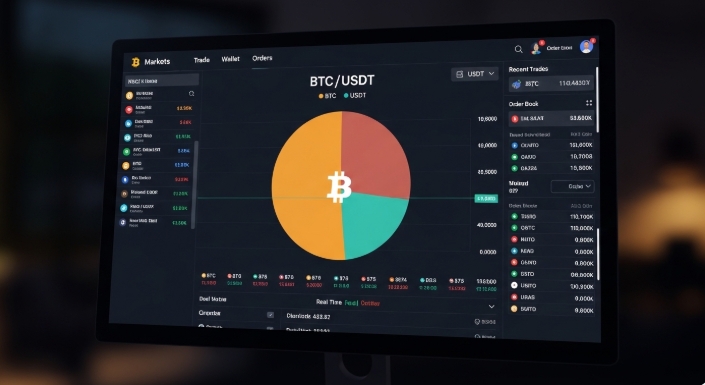
This relationship operates through several mechanisms. First, stablecoins dominate Bitcoin trading pairs. BTC/USDT (Tether) trading volume routinely exceeds 60% of all Bitcoin spot trading globally. When stablecoin supply increases, it expands the available liquidity pool that can flow into Bitcoin purchases with zero friction. Every additional billion dollars of USDT or USDC minted represents capital positioned at the edge of crypto markets, ready to enter Bitcoin positions.
Second, stablecoins create market depth that allows larger institutional orders to execute without excessive slippage. A portfolio manager seeking to deploy $100 million into Bitcoin cannot do so efficiently in illiquid markets. Deep stablecoin liquidity on major exchanges provides the order book depth necessary for institutional-scale transactions. This is why exchange stablecoin reserves serve as a leading indicator: when reserves increase, it signals capital positioning for deployment.
Historical precedent validates this dynamic repeatedly. In January 2023, Tether minted $2 billion in new USDT following months of supply contraction. Bitcoin rallied 40% over the subsequent eight weeks. In October 2023, another wave of stablecoin minting preceded Bitcoin’s climb from $27,000 to over $40,000 by year-end. The pattern is clear: stablecoin expansion creates the liquidity infrastructure that enables Bitcoin price appreciation.
Crucially, this mechanism operates independently of traditional financial market conditions. While Bitcoin increasingly correlates with equity markets during risk-on/risk-off macro shifts, stablecoin liquidity provides a crypto-native catalyst that can drive price action even when traditional markets are range-bound or declining.
Policy Transformation Unlocking Institutional Stablecoin Adoption
The regulatory landscape surrounding stablecoins has undergone seismic shifts, and Ardoino’s perspective from within policy discussions provides unique insight into what’s coming. After years of regulatory uncertainty that kept institutional capital on the sidelines, US policymakers have pivoted toward creating clear frameworks for compliant stablecoin issuance and usage.
The turning point came with bipartisan recognition that stablecoins represent both an economic opportunity and a strategic imperative. Congressional proposals for stablecoin legislation, debated throughout 2023 and 2024, establish regulatory clarity around reserve requirements, redemption mechanisms, and permissible issuers. Rather than banning or restricting stablecoins, the emerging framework legitimizes them as a new category of digital dollar infrastructure.
This matters enormously for Bitcoin. Institutional investors require compliant on-ramps. While Bitcoin ETFs provide regulated exposure to BTC price action, they don’t provide the flexibility, 24/7 access, and global portability that direct Bitcoin ownership offers. Regulated stablecoins solve the on-ramp problem: institutional treasurers can convert dollars to compliant stablecoins, then use that digital dollar liquidity to acquire Bitcoin directly, maintain custody through institutional-grade solutions, and exit to stablecoins when repositioning portfolios, all without touching traditional banking rails.
Major financial institutions are already positioning for this transition. Payment processors are integrating stablecoin rails for cross-border settlement. Corporate treasuries are exploring stablecoin cash management strategies. Each of these use cases creates additional stablecoin demand, which expands the total liquidity available for Bitcoin purchases.
The policy shift also enables stablecoin usage in traditional commerce, which paradoxically benefits Bitcoin. As stablecoins gain adoption for payments, remittances, and treasury management, they drive users into the crypto ecosystem. Once capital is denominated in stablecoins, the friction to convert a portion into Bitcoin drops to near-zero. A business holding $10 million in USDC for operational purposes can allocate 5% to Bitcoin as a treasury hedge with a single click, no bank approval required, no wire transfer delays, no currency conversion fees.
From Ardoino’s vantage point within policy circles, the regulatory clarity emerging around stablecoins represents the most significant institutional adoption catalyst since Bitcoin ETF approvals. But unlike ETFs, which are passive investment vehicles, stablecoins are active infrastructure that brings institutional liquidity directly into native crypto markets where Bitcoin trades with maximum efficiency.
The Strategic Bitcoin Reserve Infrastructure Dependency
The proposed US Strategic Bitcoin Reserve, a concept gaining traction among crypto-forward policymakers, cannot function without robust stablecoin infrastructure. This connection is rarely articulated publicly, but it’s fundamental to understanding how governments might actually accumulate and manage Bitcoin at scale.
A Strategic Bitcoin Reserve would require mechanisms for acquisition, custody, and potentially strategic deployment of Bitcoin holdings. Stablecoins provide the settlement layer that makes this operationally feasible. Government acquisition of Bitcoin through traditional banking channels faces settlement delays, counterparty risks, and limited market access. Acquiring Bitcoin using US dollar-backed stablecoins allows 24/7 market access, instant settlement, and the ability to execute across global liquidity pools.
Institutional custody solutions for a Strategic Bitcoin Reserve would also leverage stablecoin infrastructure for collateral management, lending operations, and treasury optimization. If the US government holds Bitcoin as a strategic asset, it may periodically need to monetize portions for strategic purposes or optimize holdings through lending to generate yield. Stablecoins provide the collateral and settlement mechanism for these operations.
Beyond government use, the existence of a Strategic Bitcoin Reserve would validate Bitcoin as a legitimate strategic asset, driving sovereign wealth funds, corporate treasuries, and institutional investors to allocate capital. This capital will flow through stablecoin rails. The network effects become self-reinforcing: stablecoin adoption enables Bitcoin reserve accumulation, which drives Bitcoin legitimacy, which attracts more capital into stablecoins as the preferred Bitcoin on-ramp.
Ardoino’s insight is that policy discussions around Bitcoin reserves and stablecoin regulation are not separate conversations; they’re two sides of the same infrastructure transformation. Stablecoins are the plumbing that makes large-scale, institutional Bitcoin adoption technically feasible. Without deep, liquid, regulated stablecoin markets, Bitcoin remains confined to retail adoption and limited institutional exposure through ETFs.
From a price discovery perspective, this has profound implications. If stablecoin supply grows to $500 billion, a reasonable projection given institutional adoption trajectories, even modest allocation shifts toward Bitcoin represent enormous buying pressure. A 10% allocation of stablecoin supply to Bitcoin would represent $50 billion in new demand. Given Bitcoin’s approximately $1.2 trillion market cap (at $60,000 per BTC), capital flows of this magnitude would materially impact price discovery.
Market structure analysis suggests Bitcoin price is particularly sensitive to marginal liquidity changes. Unlike traditional assets with deep institutional markets and diverse trading venues, Bitcoin price discovery concentrates on a limited number of exchanges where stablecoin trading pairs dominate. This means stablecoin liquidity expansion translates more directly to Bitcoin price impact than comparable liquidity increases might in equity markets.
Where Bycard Fits Into the Stablecoin–Bitcoin Flywheel

While institutional flows and regulatory clarity dominate headlines, the practical adoption layer often determines long-term sustainability. Bycard operates at this intersection by enabling users to convert digital dollar balances into real-world spending power via virtual payment cards.
This matters in the context of Ardoino’s thesis.
Stablecoin expansion is not just about trading liquidity, it’s about ecosystem maturity. When users can:
- Hold digital dollar balances
- Move funds instantly across borders
- Spend them globally without traditional banking friction
It strengthens confidence in crypto-native financial infrastructure.
Bycard effectively:
- Reduces reliance on slow banking rails
- Converts crypto liquidity into usable purchasing power
- Makes digital dollars functional beyond exchanges
- Supports freelancers, global earners, and remote teams operating in crypto
As more capital flows into compliant stablecoins, platforms like Bycard expand the utility layer of that liquidity. And the more useful stablecoins become in everyday finance, the more capital remains within the crypto ecosystem, increasing the probability that portions of that liquidity rotate into Bitcoin.
The Underappreciated Catalyst
The consensus narrative around Bitcoin price drivers focuses on supply dynamics (halving cycles), demand proxies (ETF inflows), and macro conditions (interest rates, inflation). These factors matter, but Ardoino’s thesis highlights the critical variable that connects them all: liquidity infrastructure.
Stablecoins provide the liquidity layer that allows demand to efficiently convert into Bitcoin purchases. They create the market depth that enables institutional participation. They offer the settlement rails that make strategic reserves operationally viable. And they’re experiencing a regulatory transformation that will unlock orders of magnitude more adoption.
For Bitcoin investors, the actionable insight is to monitor stablecoin supply metrics as a leading indicator. Track total stablecoin market cap, exchange reserves, and minting/burning patterns. When stablecoin supply expands, it signals capital positioning to enter crypto markets, with Bitcoin as the primary destination.
For policy watchers, the connection between stablecoin regulation and Bitcoin adoption is the critical relationship to understand. Regulatory clarity on stablecoins is functionally Bitcoin-bullish policy, even if not explicitly framed that way.
The former White House advisor’s perspective reveals a market dynamic hiding in plain sight: Bitcoin’s next major rally will be powered not by hype or speculation, but by the systematic expansion of stablecoin liquidity infrastructure. The secret weapon isn’t secret anymore, it’s simply underappreciated by analysts focused on traditional price drivers while the real catalyst builds beneath the surface.

Perfect Card for Transactions!

Conclusion
Bitcoin’s future price trajectory may not hinge solely on halving cycles or ETF inflows. The deeper structural force is liquidity, and stablecoins are the engine quietly expanding that liquidity base.
As regulatory clarity accelerates institutional adoption, digital dollar infrastructure will likely grow faster than many anticipate. That growth does more than support trading activity; it builds a parallel financial rail system operating 24/7, borderless and frictionless.
Platforms like Bycard demonstrate how this liquidity is already extending beyond exchanges into real-world utility. The more integrated and functional digital dollar infrastructure becomes, the more capital remains native to crypto markets.Bitcoin doesn’t just need demand. It needs deployable capital. Stablecoins provide it. Infrastructure enables it.

CATEGORIES

Wise or Revolut? Comparing the Best Multi-Currency Card

Wise Alternatives That Make Payment Faster and Currency Conversion Simple

Wire Transfer vs Bank Transfer for Better & Swift Business Payments

Why Travel Rewards Credit Cards are Highly Important

Why the Ramp Card Might Be the Best Business Card

Why Sales and Discounts Make You Overspend
