
 Log in
Why Stablecoin Adoption Accelerates in Finance and Emerging Markets
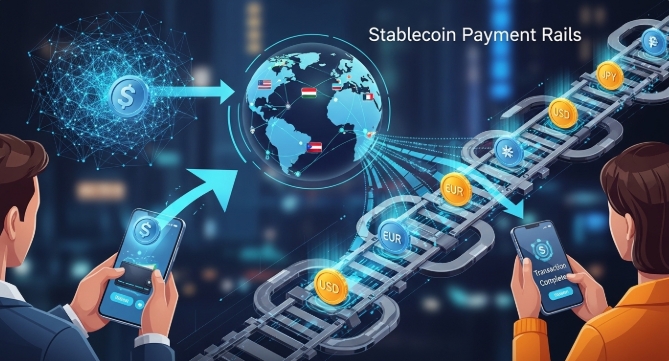
Stablecoin is no longer fringe digital assets. Around the world, they have emerged as one of the most used financial tools, especially where traditional systems struggle with cost, speed, or accessibility.
If you’ve been watching fintech or digital currency trends, you’ve likely heard the term stablecoins a lot. But what’s behind that buzz? Why are stablecoins becoming central to global payments, treasury processes, cross-border transfers, and even everyday business operations?
- Why Stablecoin Adoption Accelerates in Finance and Emerging Markets
Why Stablecoins Are Gaining Ground in Traditional Finance
In conventional financial systems, stablecoins are bridging gaps that banks and payment providers have long struggled to solve efficiently. Here’s how:
Faster and Cheaper Cross-Border Payments
Traditional cross-border transactions often go through correspondent banks and legacy rails, causing delays of days and fees that accumulate at each step.
Stablecoins move value on blockchains in minutes, dramatically reducing settlement times. Institutions can settle funds faster, lower costs, and minimize counterparty risk. This is not just theory, Visa and Mastercard, for example, are actively exploring stablecoin initiatives for settlement infrastructure in regions like CEMEA to enhance liquidity and reduce costs.
Bridging Crypto to Real-World Spending With Bycard
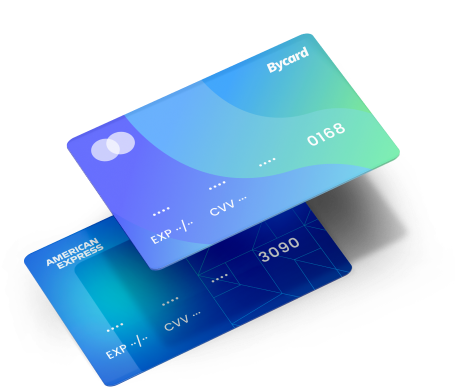
Platforms like Bycard allow users to fund virtual cards using stablecoins such as USDT, turning stable digital value into spendable fiat through Visa or Mastercard rails. Users can instantly top up cards and spend anywhere these cards are accepted, for online purchases, vendor bills, or media buys, eliminating waiting periods or conversion hassles.
This capability demonstrates how stablecoins are increasingly integrated not just into financial infrastructure, but into everyday business operations.
Treasury Management and Liquidity On Demand
Stablecoins let treasury teams move value instantly between entities, reducing reliance on legacy banking cut-offs and time zones. Instead of waiting for wire transfers, businesses can reallocate balances in real time, optimizing liquidity and operational flexibility.

Perfect Card for running ads!
The Role of Digital Dollars in Developing Economies
In many parts of Africa, Asia, and Latin America, stablecoins are attracting users for very practical reasons, not speculation.
Inflation Protection and Currency Stability
In economies experiencing rapid inflation or currency volatility, holding stablecoins is a way to preserve purchasing power digitally. Users can access U.S. dollar–pegged value without needing an offshore bank account, which is often expensive or inaccessible in many emerging markets.
Here, stablecoins serve as alternatives to weak local currency holdings, a financial hedge that’s simple to use because of their stable nature.
Remittances That Cost Less and Settle Faster
Remittances from abroad are a major economic stream for many emerging markets. Traditional money transfer services can charge high fees and take time.
Stablecoins reduce those costs and delays by enabling near-instant settlement. Recipients can receive stablecoins quickly and convert them to local currency or use them via platforms like Bycard to spend globally, providing a practical, cost-efficient alternative.
Financial Inclusion Through Digital Wallets
Stablecoins only require a digital wallet and internet access. This lowers barriers for unbanked populations to participate in digital finance.
Combined with platforms that support stablecoin top-ups and virtual card spending, users gain a full spectrum of financial tools without traditional bank accounts or credit histories.
Bridging Digital Assets With Global Spending

Beyond remittances and treasury functions, stablecoins are reshaping how businesses handle payments, especially those operating globally or in digital services.
Practical Payment Solutions With Bycard
Many companies now use stablecoins as backend currencies for payments through tools like virtual cards. With Bycard, businesses can:
- Fund virtual cards with stablecoins (e.g., USDT)
- Set granular spending controls and limits per card
- Track expenses and reconcile reports in real time
- Use dedicated cards for specific platforms such as Google Ads, TikTok, Meta, and others
This is a practical use of stablecoins, not for trading or speculation, but for actual business expense management and vendor payments.
Security and Control for Payments
Platforms like Bycard also offer enhanced security features such as spend limits, instant freeze, and role-based controls. These features help teams reduce payment risk and improve spending transparency, key factors when stablecoins touch real budgets.
Transaction Volume and Market Expansion
Stablecoins now account for a significant portion of digital asset transaction volume worldwide. Beyond crypto exchanges, usage has spread into:
- Cross-border settlements
- Invoice and vendor payments
- Digital ad spend management
- Treasury operations
Analyses show stablecoin circulation continues to grow, crossing well over $150 billion globally and rising as use cases expand beyond trade into real money movement.
Risks and Considerations With Stablecoin

No financial instrument is perfect. When integrating stablecoins into business workflows or personal finance, consider:
Transparency and Reserve Backing
Different stablecoins have varying reserve practices. Fiat-backed stablecoins generally offer more predictable stability, but it’s important to choose assets and platforms with clear disclosures and audits.
Regulatory Landscape
Regulations are evolving. Some markets are rapid to adopt stablecoins, while others are cautious or restrictive. Businesses must understand compliance requirements in each operating region.
Counterparty and Custody Risks
Underlying custodians and platforms handling stablecoin workflows matter. Choosing reputable and compliant partners, such as services with strong licensing and security practices, can mitigate these risks.
The Long-Term Case for Blockchain-Based Dollars
When you combine:
- Near-instant global settlement
- Lower transaction costs
- Programmable digital value
- Financial access in unstable economies
- Practical integrations like Bycard virtual spending tools
It becomes clear why stablecoins are being adopted at scale. In traditional finance, they optimize long-standing pain points like cross-border settlement and liquidity. In emerging markets, they provide stability and inclusion where traditional systems fall short.
Stablecoins bridge fiat-centric economies and digital financial innovation, and that’s not just a trend. It’s a structural shift in how money moves.
Conclusion
Stablecoins are no longer an abstract concept in crypto circles. They are becoming operational in real financial systems, from treasury desks in multinational firms to freelancers in emerging markets. With platforms like Bycard unlocking practical spend-ready applications, stablecoins move from theory into everyday utility.
This shift, from “What are stablecoins?” to “How can I use them?” is why adoption continues accelerating across finance and emerging markets alike.

CATEGORIES
Wise or Revolut? Comparing the Best Multi-Currency Card
Wise Alternatives That Make Payment Faster and Currency Conversion Simple
Wire Transfer vs Bank Transfer for Better & Swift Business Payments

Why Travel Rewards Credit Cards are Highly Important
Why the Ramp Card Might Be the Best Business Card

Why Sales and Discounts Make You Overspend
