
 Log in
Best Digital Currency to Invest in for Long-Term Growth

Digital currency has moved far beyond being a niche technology experiment. What began with a decentralized payment network has grown into an ecosystem worth trillions of dollars, powering everything from global payments to decentralized finance.
For investors thinking about long-term growth, the key question is not simply which coin is trending today. Instead, it’s about identifying digital currencies that demonstrate strong adoption, large market capitalization, practical use cases, and resilient price trends.Another important factor is real-world usability. Digital currency becomes far more valuable when it can be used easily for everyday payments. New financial infrastructure is emerging to bridge this gap. For example, platforms like Bycard allow users to convert cryptocurrencies into spendable funds through virtual cards that work globally, making digital assets easier to use in everyday financial activity.
- Best Digital Currency to Invest in for Long-Term Growth
- Key Factors Long-Term Investors Look For
- 1. Real-World Use Cases
- 2. Adoption and Developer Ecosystem
- 3. Financial Infrastructure and Payment Access
- 4. Market Stability
- Best Digital Currency to Invest in for Long-Term Growth
- 1. Bitcoin: The Store-of-Value Leader
- 2. Ethereum: The Infrastructure Layer of Crypto
- 3. BNB: Powering a Major Exchange Ecosystem
- 4. Solana: Speed and Scalability
- 5. XRP: Focused on Cross-Border Payments
- How Digital Currency Adoption Is Expanding
- Price Trends and Market Cycles
- Building a Long-Term Digital Currency Portfolio
- Risks Investors Should Consider
Understanding Digital Currency as an Investment
Digital currency operates differently from traditional investment assets.
Stocks represent ownership in companies, while bonds represent debt obligations. Digital currencies, on the other hand, typically derive their value from:
- Network adoption
- Market liquidity
- Real-world utility
- Developer ecosystem growth
- Institutional participation
Investors therefore evaluate digital currencies based on their economic networks and infrastructure value rather than traditional financial metrics.
What Market Cap Tells Investors
Market cap = current price × circulating supply.
High market cap usually indicates:
- Greater investor confidence
- Higher liquidity
- Lower relative risk
Bitcoin dominates the market, and Ethereum consistently ranks second, making large-cap digital currencies the foundation of long-term portfolios.
Key Factors Long-Term Investors Look For
Not every digital currency survives long market cycles. Investors usually focus on a few core fundamentals before allocating capital.
1. Real-World Use Cases
The strongest digital currencies solve real problems:
- Cross-border payments
- Decentralized finance (DeFi)
- Smart contract infrastructure
- Tokenized assets
Coins supporting broad ecosystems are more resilient to market shifts.
2. Adoption and Developer Ecosystem
Projects with active developer communities often evolve faster.
Large developer ecosystems produce:
- Decentralized applications (dApps)
- New financial tools
- Integrations with payment services and wallets
This constant development keeps networks relevant and increases adoption.
3. Financial Infrastructure and Payment Access
One of the biggest challenges in the digital currency market has historically been spending crypto easily in everyday life.
This is where infrastructure platforms play an important role.
For instance, services like Bycard allow users to convert cryptocurrencies such as BTC, ETH, or USDT into fiat and load the funds onto virtual cards that can be used for online payments, subscriptions, and global purchases.
These types of solutions help bridge the gap between crypto ownership and real-world financial activity, which ultimately supports broader adoption.
4. Market Stability
Coins with larger market caps typically experience fewer extreme price swings than small-cap tokens.
While volatility remains a feature of crypto markets, long-term investors often prefer assets with stronger liquidity and institutional participation.
Best Digital Currency to Invest in for Long-Term Growth
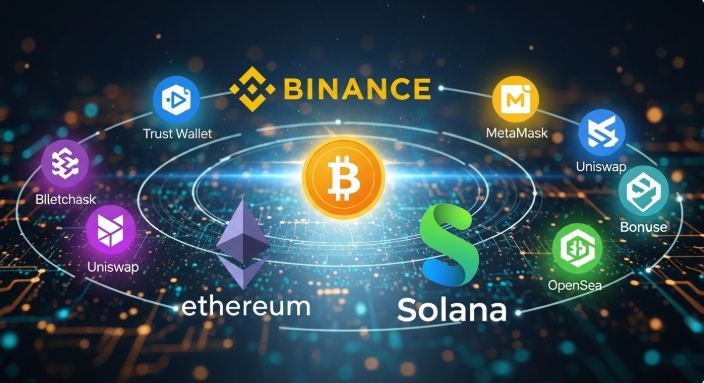
Several digital currencies consistently attract long-term investors because of their large market capitalization, clear use cases, and growing adoption. While the crypto market includes thousands of tokens, only a small number have maintained strong relevance across multiple market cycles.
The digital currencies below stand out because they support large ecosystems, strong developer communities, and expanding financial infrastructure. These factors often influence how investors evaluate long-term growth potential.
1. Bitcoin: The Store-of-Value Leader
Why Long-Term Investors Hold Bitcoin
- Fixed supply: 21M coins
- Largest market capitalization
- High liquidity and institutional adoption
Why Investors Hold Bitcoin:
- Institutional adoption: ETFs, hedge funds, and companies increase credibility
- Market liquidity: Easier for large positions to trade without big price swings
- Global payment integration: Platforms like Bycard let users spend Bitcoin worldwide
2. Ethereum: The Infrastructure Layer of Crypto
Ethereum changed the digital currency landscape by introducing smart contracts, which allow developers to build applications directly on blockchain networks.
Instead of functioning only as a digital currency, Ethereum operates as a programmable platform that supports an entire ecosystem of decentralized applications.
Market Position: Second-largest by market cap
Major Use Cases:
- DeFi: Lending, trading, and liquidity protocols
- NFTs: Digital ownership and marketplaces
- Smart Contracts: Foundation for dApps
Investor Appeal:
- Large developer ecosystem
- Regular upgrades
- Institutional interest
Ethereum is viewed as a long-term platform investment, not just a digital currency.
3. BNB: Powering a Major Exchange Ecosystem
BNB is the native token of the Binance ecosystem, which includes one of the largest cryptocurrency exchanges in the world as well as its own blockchain network, BNB Chain.
The success of the Binance platform has played a major role in the growth of BNB.
Market Overview: Tied to Binance and BNB Chain
Use Cases:
- Exchange utility: Trading discounts, token launches, transaction fees
- dApps: DeFi platforms, games, NFT marketplaces
- Payments: Convert to spendable balances via crypto-finance tools
BNB benefits from a robust ecosystem and growing adoption.
4. Solana: Speed and Scalability
Solana has gained attention as one of the fastest blockchain networks in the digital currency market.
Its design focuses heavily on high transaction throughput and low fees, which makes it attractive for applications that require large volumes of transactions.
Market Position: Top smart contract platform by market cap
Strengths:
- High transaction speed (thousands/sec)
- Low fees
- Expanding ecosystem: DeFi, NFTs, gaming
Solana appeals to growth-oriented investors due to scalability and developer activity.
5. XRP: Focused on Cross-Border Payments
XRP was designed to improve the efficiency of international payment systems.
Traditional cross-border transactions often rely on multiple banks and intermediaries, which can make transfers slow and expensive.
XRP attempts to simplify this process by enabling faster settlement between financial institutions.
Use Case: Fast settlement for international transfers
Investor Appeal:
- Focus on financial infrastructure
- Partnerships with payment institutions
- High liquidity
XRP targets the modernization of cross-border finance.
How Digital Currency Adoption Is Expanding
Adoption remains one of the strongest drivers of long-term growth.
Several trends are accelerating digital currency usage worldwide.
Institutional Investment
Large financial institutions increasingly offer:
- Crypto ETFs
- Custody solutions
- Digital asset trading services
These developments make crypto more accessible to traditional investors.
Payment Infrastructure Expansion
One of the most important developments in recent years is the growth of crypto payment infrastructure.
Services such as Bycard allow users to fund virtual payment cards with cryptocurrency balances, convert crypto into fiat instantly, and use those funds for online purchases, subscriptions, or advertising campaigns.
By removing friction between crypto and traditional payment systems, these tools help make digital currencies more practical for everyday use.
Emerging Market Adoption
In regions where banking access is limited or local currencies are unstable, digital currencies are sometimes used as alternative financial tools.
This trend is particularly visible in emerging markets where mobile-first financial systems are common.
Price Trends and Market Cycles
Digital currency markets typically follow repeating cycles:
- Accumulation phase: early investors begin buying quietly
- Bull market: rapid price increases and high market enthusiasm
- Correction phase: prices fall significantly
- Recovery and consolidation
Long-term investors often focus less on short-term volatility and more on multi-year adoption growth.
Bitcoin, for example, has experienced several large corrections but still shows strong long-term growth trends across multiple cycles.
Building a Long-Term Digital Currency Portfolio

Most investors avoid putting all capital into a single digital currency.
Instead, portfolios often include a mix of assets with different roles.
Large-Cap Assets
Examples include:
- Bitcoin
- Ethereum
These assets provide relative stability compared to smaller tokens.
Growth Platforms
Examples include:
- Solana
- BNB
These networks focus on expanding ecosystems and developer activity.
Specialized Networks
Examples include:
- XRP for payments
- Data and infrastructure-focused projects
Diversification helps balance risk across different parts of the digital asset ecosystem.
Risks Investors Should Consider
Market Volatility
Crypto prices can move 10–20% in a short period. Long-term investors focus on trends, diversification, and large-cap assets.
Regulatory Uncertainty
Governments are developing crypto rules, impacting exchanges, taxation, and market participation.
Technology Risks
Blockchain outages, smart contract flaws, and platform vulnerabilities exist. Using well-established networks and platforms like Bycard reduces operational friction.
Managing Risk
- Diversify holdings
- Focus on strong adoption and market cap
- Track regulatory changes
- Maintain long-term perspective
By combining careful research with a disciplined strategy, investors can participate in the growth of digital currency markets while managing potential downsides.
Conclusion
Digital currency markets continue to evolve rapidly, but a few projects have established themselves as long-term leaders.
Assets like Bitcoin, Ethereum, BNB, Solana, and XRP attract investors because they combine strong market capitalization, real-world use cases, and expanding adoption. At the same time, supporting infrastructure is becoming increasingly important. Tools such as Bycard, which allow users to convert and spend crypto through globally accepted virtual cards, are helping bridge the gap between digital assets and everyday financial activity.
As payment infrastructure improves and adoption continues to grow, digital currencies are likely to play an increasingly important role in global finance. For long-term investors, the most important strategy is understanding which networks are building lasting value, not just following short-term market hype.

CATEGORIES
Wise or Revolut? Comparing the Best Multi-Currency Card
Wise Alternatives That Make Payment Faster and Currency Conversion Simple

Wire Transfer vs Bank Transfer for Better & Swift Business Payments

Why Travel Rewards Credit Cards are Highly Important
Why the Ramp Card Might Be the Best Business Card

Why Sales and Discounts Make You Overspend
