
 Log in
The Hidden Reasons Behind Bitcoin’s 2026 Crash
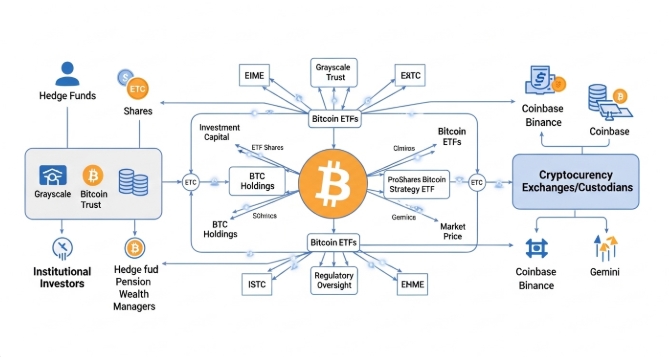
Everyone’s talking about volatility. Nobody’s mentioning the real reason Bitcoin crashed.
As Bitcoin plummeted from its early 2026 highs to test levels not seen since 2023, financial media churned out the same tired explanations: “market volatility,” “profit-taking,” “regulatory uncertainty.” These buzzwords might satisfy casual observers, but if you’re a serious trader who watched your portfolio evaporate, you deserve better answers.
The truth? The 2026 Bitcoin crash wasn’t just another cycle of boom and bust. It was the inevitable result of structural changes in the cryptocurrency market that most analysts either missed or deliberately ignored. While talking heads blamed vague “market forces,” a perfect storm of institutional mechanisms, regulatory coordination, and infrastructure vulnerabilities converged to create the most significant crypto crash in years.
For traders and globally exposed professionals, one overlooked lesson from the crash was the danger of keeping all liquidity inside the crypto ecosystem. When infrastructure stress spreads across exchanges, ETFs, and stablecoin issuers, access to real-world spending power becomes critical. Platforms like Bycard offer a bridge between digital asset holdings and practical global payments, reducing reliance on fragile exchange liquidity during systemic stress events.
Beyond the Volatility Narrative
The Convenient Lie of “Normal Market Cycles”
When Bitcoin shed 60% of its value between March and June 2026, mainstream analysts defaulted to familiar scripts. “Bitcoin has always been volatile,” they said. “This is just another correction before the next bull run.” But this explanation conveniently ignores that the market structure of 2026 bore little resemblance to previous cycles.
Unlike the retail-driven crashes of 2018 or 2022, the 2026 collapse happened in a fundamentally different ecosystem. Institutional ownership through ETFs had reached unprecedented levels. Derivative markets had exploded in complexity and leverage. Mining operations had consolidated under fewer, larger entities. Most critically, regulatory frameworks across major economies had quietly synchronized in ways that would prove devastating.
The standard volatility narrative serves a purpose: it protects institutions from scrutiny while keeping retail traders in the game. After all, if crashes are just “normal volatility,” there’s no need to examine the systemic issues that caused them.
Five Factors the Mainstream Won’t Discuss
Before we dive deep into the ETF dynamics that accelerated the crash, let’s identify the overlooked factors that created the conditions for collapse:
1. Coordinated Global Regulatory Pressure: While media focused on individual country policies, few noticed the quiet coordination between the U.S. SEC, European Securities and Markets Authority, and Asian regulators throughout 2025.
2. Mining Centralization Threshold: By early 2026, three mining conglomerates controlled over 51% of Bitcoin’s hash rate, a concentration that fundamentally undermined decentralization claims.
3. Derivative Leverage Ratios: Offshore exchanges had pushed leverage offerings to 200x, creating a house of cards where small price movements triggered catastrophic liquidation cascades.
4. The Stablecoin Contagion Risk: Tether’s backing remained questionable, and when confidence wavered in Q2 2026, the ripple effects hit Bitcoin harder than any other asset.
5. Energy Policy Convergence: New environmental regulations targeting proof-of-work mining simultaneously took effect across North America and Europe, creating unprecedented operational pressure.
Each of these factors deserved front-page analysis. Instead, they were buried beneath simplistic volatility narratives.
The ETF Dynamics Nobody Predicted
How Institutional Access Became Institutional Control
The approval of Bitcoin ETFs in 2024 was celebrated as cryptocurrency’s mainstream moment. Finally, institutional money could flow into Bitcoin through regulated vehicles. What could go wrong?
Everything, as it turned out.
Bitcoin ETFs fundamentally altered market dynamics in ways that became catastrophically clear during the 2026 crash. Rather than providing stable institutional demand, ETFs created new fragility points that amplified selling pressure when conditions deteriorated.
The Redemption Mechanism Time Bomb
Here’s what most traders didn’t understand: Bitcoin ETFs don’t work like traditional equity ETFs. When investors redeem ETF shares, authorized participants must either deliver Bitcoin or cash equivalents. During normal markets, this mechanism operates smoothly. During panic? It becomes a feedback loop of destruction.
As Bitcoin prices fell in March 2026, ETF redemptions accelerated. To meet redemption demands, authorized participants sold Bitcoin on exchanges, pushing prices lower. Lower prices triggered more ETF redemptions. More redemptions meant more selling. The spiral continued for weeks, with institutional mechanisms amplifying rather than dampening volatility.
Retail traders selling in panic is one thing. Institutional redemption mechanics forcing continuous selling regardless of market conditions? That’s a structural problem that turned a correction into a crash.
Liquidity Fragmentation Across Providers
By 2026, over a dozen Bitcoin ETF providers competed for market share. Sounds healthy, right? Competition and choice?
In reality, this fragmentation created liquidity problems that mainstream analysts ignored. Each ETF maintained separate Bitcoin holdings with different custodians. When selling pressure hit, these fragmented pools couldn’t efficiently absorb sell orders. Instead of a unified deep liquidity pool, the market fractured into competing silos.
During the crash’s peak in late May, this fragmentation meant that identical assets (Bitcoin) traded at meaningful price discrepancies across different ETF providers. Arbitrage should have smoothed these differences, but the volume and speed of selling overwhelmed market makers’ capacity.
The Institutional Selling Pattern
Retail traders sell emotionally, panic, fear, capitulation. Institutional traders follow protocols, mandates, and risk parameters. When Bitcoin’s 30-day volatility exceeded certain thresholds in April 2026, automatic risk management systems at pension funds, endowments, and asset managers triggered sell protocols.
These weren’t emotional decisions. They were programmed responses. And they happened simultaneously across hundreds of institutions holding Bitcoin through ETFs.
This synchronized institutional selling created price movements that looked like panic but were actually the mechanical execution of risk parameters. The result? Deeper, faster price declines than any purely retail-driven crash could achieve.
Counterparty Risks in the ETF Ecosystem
Perhaps the most dangerous overlooked factor: the web of counterparty relationships underlying Bitcoin ETFs. Custodians, authorized participants, prime brokers, and clearinghouses all play critical roles. When stress tests these relationships during the crash, several near-failures received almost no media coverage.
In mid-May 2026, two mid-tier authorized participants faced liquidity crises due to their Bitcoin ETF exposure. Only emergency credit facilities prevented defaults that could have frozen the entire ETF redemption process. Most traders never heard about this near-miss because it was resolved quietly behind closed doors.
But it revealed a crucial truth: Bitcoin ETFs introduced traditional financial system risks into cryptocurrency markets. The decentralized asset became dependent on centralized institutional infrastructure, infrastructure that proved fragile under pressure.
What They’re Deliberately Ignoring

The Regulatory Coordination Timeline
Here’s a timeline most media outlets won’t connect: In November 2025, the U.S. Treasury finalized new cryptocurrency reporting requirements. In December 2025, the EU implemented its Markets in Crypto-Assets (MiCA) framework enforcement. In January 2026, major Asian economies simultaneously announced enhanced KYC requirements for crypto exchanges.
Coincidence? Hardly.
These regulatory moves were coordinated through international financial stability forums. The goal wasn’t to ban cryptocurrency; it was to bring it fully under the traditional financial regulatory umbrella, thereby limiting its disruptive potential.
When these regulations went live in Q1 2026, they created compliance costs and operational friction that particularly impacted smaller exchanges and market makers. This reduced market liquidity precisely when Bitcoin needed robust trading infrastructure to absorb selling pressure.
The crash wasn’t caused by regulation, but regulatory timing and coordination created conditions where a correction became a collapse.
Mining Centralization’s Critical Threshold
Bitcoin’s security model assumes distributed mining across many independent operators. By early 2026, that assumption no longer held.
Three major mining conglomerates, formed through years of consolidation as smaller miners were squeezed out by efficiency pressures, controlled over 51% of the network hash rate. This concentration meant that coordinated actions (intentional or not) by just three entities could theoretically compromise network security.
When environmental regulations hit these large miners simultaneously in Q2 2026, their operational capacity dropped sharply. Network hash rate fell by 35% in six weeks. While the network adjusted difficulty accordingly, the perception of vulnerability damaged Bitcoin’s security narrative at the worst possible time.
Mainstream media barely covered this angle because it undermined the decentralization story that makes Bitcoin attractive. But traders who understood the implications sold accordingly.
The Leverage Liquidation Cascade
Offshore exchanges offering 50x, 100x, even 200x leverage had been ticking time bombs for years. In 2026, they finally exploded.
When Bitcoin dropped 15% in a single day in early April, the liquidation cascade began. Leveraged long positions were automatically closed, creating selling pressure that pushed prices lower. Lower prices triggered more liquidations. Within hours, over $12 billion in leveraged positions were liquidated across major exchanges.
This wasn’t organic selling by traders changing their minds, it was forced selling by algorithmic liquidation engines. And it happened so fast that it overwhelmed the exchange infrastructure, with several platforms halting trading temporarily due to “technical issues.”
The leverage problem had been obvious for years, but it generated too much exchange revenue to address voluntarily. The 2026 crash proved that what’s profitable isn’t always sustainable.

Perfect Card for Payments

The Stablecoin Question Mark
Tether’s market capitalization in early 2026 exceeded $150 billion. Its actual reserves? Still opaque despite years of promises about transparency. When confidence in Tether wavered during the crash, the effects rippled across all cryptocurrency markets.
If Tether faced a serious run, would its reserves (whatever they actually were) be sufficient? Nobody knew for certain. That uncertainty caused traders to exit not just Tether but all crypto assets that might be affected by a Tether collapse.
The stablecoin contagion risk turned the Bitcoin crash into a broader cryptocurrency crisis. Yet mainstream analysis treated Tether concerns as a separate issue rather than a core component of the crash dynamics.
Energy Policy and Mining Economics
The final ignored factor: converging energy policies that targeted cryptocurrency mining. New regulations in Texas, Kazakhstan, and Northern Europe simultaneously restricted or taxed the energy-intensive mining operations that had flourished in those regions.
This wasn’t a coincidence, it reflected growing political consensus that proof-of-work mining’s energy consumption was environmentally indefensible. Whether you agree with that assessment or not, the timing created a perfect storm: regulatory pressure, increased costs, and mining centralization all hitting simultaneously.
Mining profitability collapsed even faster than Bitcoin’s price. Miners who had leveraged themselves to expand during the bull market now faced bankruptcy. Forced selling of Bitcoin holdings by distressed miners added yet another source of selling pressure.
Positioning for the Next Crisis
So what should informed traders take away from the 2026 crash? Several crucial lessons:
- Watch institutional infrastructure, not just price. The next crisis will likely originate from structural issues in how institutions access and trade Bitcoin, not from retail sentiment.
- Regulatory coordination matters more than individual policies. When major economies align their regulatory approaches, the impact multiplies.
- Leverage is always the accelerant. Whether in 2026 or 2036, excessive leverage will turn corrections into crashes.
- Centralization risks accumulate slowly, then strike suddenly. Mining concentration, exchange dominance, and custodian consolidation all create single points of failure.
- Have exit strategies beyond crypto markets. When the entire ecosystem faces correlated risks, you need options outside the ecosystem.
- Separate trading capital from spending capital. Maintaining access to usable global payment infrastructure, including solutions like Bycard, can help traders avoid being trapped during exchange halts, withdrawal freezes, or liquidity crunches.
The 2026 Bitcoin crash wasn’t about volatility. It was about an immature market confronting the realities of institutional integration, regulatory sophistication, and structural vulnerabilities. Those who understood these hidden factors preserved capital. Those who believed the mainstream volatility narrative did not.
Bycard Payment Infrastructure in Volatile Markets

Structural crypto crises don’t just impact price, they impact access.
When exchanges suspend withdrawals, stablecoin confidence wavers, or ETF liquidity fragments, traders face a second risk beyond portfolio drawdowns: payment paralysis. Being “asset rich” inside an ecosystem under stress doesn’t guarantee real-world liquidity.
This is where Bycard becomes strategically relevant:
- Enables global spending without waiting for traditional banking off-ramps
- Reduces dependency on a single exchange during market-wide stress
- Provides practical transaction utility beyond speculative holding
- Diversifies infrastructure exposure away from purely ETF or exchange-based systems
In environments where institutional mechanisms amplify downside volatility, flexibility becomes an advantage. Tools that bridge digital asset exposure and global payment rails can act as shock absorbers when centralized crypto infrastructure falters.
Bycard doesn’t eliminate market risk, but it can reduce access risk, and during crashes, access is everything.
Conclusion
The 2026 Bitcoin crash wasn’t about volatility. It was about an immature market confronting the realities of institutional integration, regulatory sophistication, and structural vulnerabilities. Those who understood these hidden factors preserved capital. Those who believed the mainstream volatility narrative did not.
The question isn’t whether Bitcoin will crash again, volatility is inherent to emerging asset classes. The question is whether you’ll recognize the real warning signs next time, or whether you’ll be distracted by the same tired narratives that leave traders unprepared and unprotected.
Resilience in the next cycle won’t just depend on predicting price. It will depend on diversifying infrastructure exposure, managing leverage intelligently, and maintaining access to functional liquidity channels, including real-world payment bridges like Bycard that operate beyond traditional exchange constraints.

CATEGORIES

Wise or Revolut? Comparing the Best Multi-Currency Card

Wise Alternatives That Make Payment Faster and Currency Conversion Simple

Wire Transfer vs Bank Transfer for Better & Swift Business Payments

Why Travel Rewards Credit Cards are Highly Important

Why the Ramp Card Might Be the Best Business Card

Why Sales and Discounts Make You Overspend
