
 Log in
Bitcoin’s Identity Crisis: Store of Value vs Currency

The Bitcoin community faces a fundamental paradox: the cryptocurrency was designed as “peer-to-peer electronic cash,” yet its most devoted supporters advocate never spending it. This tension between Bitcoin’s original vision and its evolved identity as “digital gold” raises uncomfortable questions about whether mass adoption is even possible, or desirable, when the dominant investment strategy is to hold indefinitely.
Satoshi Nakamoto’s 2008 whitepaper introduced Bitcoin as a solution to the double-spending problem, creating a trustless payment system free from financial intermediaries. Nowhere in that foundational document does the term “store of value” appear. Yet fifteen years later, the prevailing wisdom in crypto circles is to HODL, a misspelled rallying cry that has become gospel for a generation of investors who view spending Bitcoin as a fundamental mistake.
This identity crisis isn’t just philosophical posturing. It has real implications for Bitcoin’s future trajectory, network utility, and ultimate success or failure as a revolutionary technology. Can Bitcoin truly achieve mass adoption if everyone is incentivized to never use it for its intended purpose?
Infrastructure Barriers: Why Bitcoin Struggles as Everyday Currency
Before examining the ideological debate, we must confront the practical realities that prevent Bitcoin from functioning as everyday money, even for those willing to spend it.
Transaction Speed and Costs
Bitcoin’s base layer processes approximately 7 transactions per second, compared to Visa’s 24,000. During periods of network congestion, transaction fees have spiked to $50 or more per transfer, making small purchases economically absurd. Imagine paying $30 in fees to buy a $15 lunch. This scalability limitation isn’t a bug that can be easily patched, it’s baked into Bitcoin’s security model, where slower confirmation times and limited throughput are deliberate trade-offs for decentralization and censorship resistance.
Merchant Adoption Challenges
Despite Bitcoin’s 15-year existence, merchant acceptance remains minimal. Payment processors like BitPay and Coinbase Commerce exist, but mainstream retailers largely avoid cryptocurrency due to volatility risk, accounting complexity, and regulatory uncertainty.
Even where direct acceptance is limited, alternative infrastructure has emerged. Platforms like Bycard allow users to convert Bitcoin into virtual cards that can be used anywhere major card networks are accepted. Instead of convincing every merchant to accept Bitcoin, this model bridges crypto to existing global payment rails, removing the merchant adoption bottleneck entirely.
Most merchants who do “accept Bitcoin” immediately convert it to fiat currency, hardly a vote of confidence in Bitcoin as money.
Volatility Makes Pricing Impossible
Currency requires relative stability. Bitcoin’s 30-50% annual volatility makes it unsuitable for price denomination. The famous 2010 Bitcoin pizza transaction that cost 10,000 BTC (worth over $400 million at Bitcoin’s all-time high) illustrates why both merchants and consumers hesitate to transact in a currency that might double or halve in value within months.
For users who want exposure to Bitcoin without bearing day-to-day spending risk, card-based conversion platforms provide a compromise: hold Bitcoin long-term, convert only the amount needed at the moment of purchase, and spend in local currency instantly.
User Experience Complexity
Sending Bitcoin requires managing private keys, understanding address formats, waiting for confirmations, and accepting the risk of irreversible transactions. For mainstream adoption, payments must be frictionless. The reality is that tapping a credit card or phone remains exponentially easier than navigating Bitcoin wallets.
This complexity has historically slowed adoption. However, fintech-style interfaces are abstracting these technical layers. With platforms like Bycard, users don’t need to manually broadcast transactions or manage confirmations for everyday purchases. They simply fund their wallet and spend via a virtual card, a user experience that feels closer to traditional digital banking than early crypto wallets.
Layer 2 Limitations
The Lightning Network promises to solve Bitcoin’s scalability issues through off-chain payment channels, enabling instant, low-fee transactions. While technically impressive, Lightning adoption remains limited due to liquidity challenges, routing complexity, and the need to lock funds in channels. For most users, Lightning still feels like beta technology rather than a production-ready payment solution.
These infrastructure barriers are significant, but they’re solvable with sufficient development resources and time. The deeper problem lies in the economic incentives that discourage Bitcoin usage even when technical solutions exist.
The Philosophical Divide: Digital Gold vs. Peer-to-Peer Cash
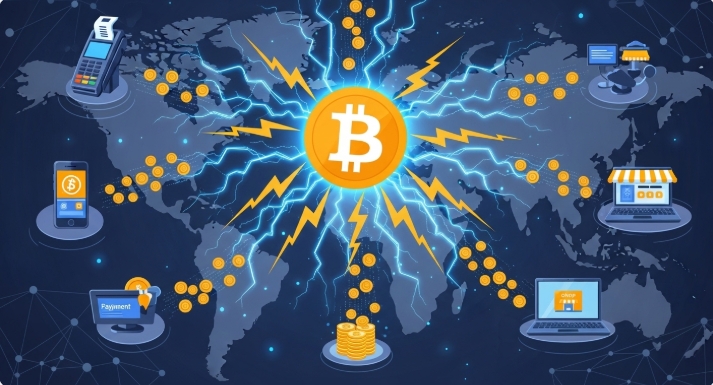
The shift from Bitcoin-as-currency to Bitcoin-as-investment represents one of the most consequential pivots in financial technology history. Understanding this transition requires examining both economic theory and community culture.
Satoshi’s Vision vs. Market Evolution
Satoshi Nakamoto designed Bitcoin as a response to the 2008 financial crisis, creating a payment system that eliminated the need for trusted third parties. Early adopters used Bitcoin for transactions, famously on Silk Road, but also for remittances, online commerce, and ideological statements against fiat currency.
The “digital gold” narrative emerged as Bitcoin’s price began appreciating dramatically. Thought leaders like Michael Saylor and prominent investors reframed Bitcoin not as a payment network but as a superior store of value, harder money than gold, with verifiable scarcity (21 million coin cap) and immunity from government debasement.
This reframing was strategically brilliant for investment marketing but fundamentally altered Bitcoin’s purpose. Instead of disrupting Visa, Bitcoin now aspires to replace gold reserves and treasury assets.
Gresham’s Law: Why People Hoard “Good Money”
Economists point to Gresham’s Law, “bad money drives out good”, to explain HODLing behavior. When presented with two forms of money, rational actors spend the depreciating currency (fiat) and hoard the appreciating one (Bitcoin). If you believe Bitcoin will increase in value, spending it today means losing future purchasing power. That 10,000 BTC pizza haunts every potential Bitcoin transaction.
This creates a vicious cycle: the more Bitcoin is viewed as an appreciating asset, the less it circulates; the less it circulates, the less it functions as currency; the less it functions as currency, the more it’s valued purely on speculation and scarcity.
The HODLing Culture and Network Effects
The Bitcoin community has developed a powerful cultural narrative around holding: “weak hands” sell during dips, while “diamond hands” weather volatility. This creates strong social pressure against spending Bitcoin for consumption.
Yet network effects, the phenomenon where a network becomes more valuable as more people use it, require actual usage, not just ownership. A payment network where no one makes payments isn’t a network at all; it’s a distributed spreadsheet of who owns what.
The Adoption Paradox
Here lies the central paradox: Bitcoin needs widespread adoption to justify its valuation, but widespread adoption requires people to use it transactionally. If Bitcoin succeeds purely as a store of value, it becomes a circular asset valued only because others believe it has value, a speculative bubble with no fundamental utility.
Conversely, if Bitcoin functions primarily as currency, its value would derive from transaction volume and network utility rather than scarcity speculation. This would likely result in lower, more stable valuations, better for commerce, worse for investors seeking massive returns.
Environmental Considerations
Bitcoin’s proof-of-work mining consumes enormous energy, comparable to entire countries. Critics argue this energy expenditure is defensible only if Bitcoin provides genuine utility. If Bitcoin functions merely as “digital gold” for wealthy investors to accumulate, the environmental cost appears wasteful. If it revolutionizes global payments and financial inclusion, the energy use becomes more justifiable.
This adds another dimension to the identity crisis: Bitcoin’s social license to operate may depend on proving transactional utility beyond speculative investment.
Payment Solutions: The Path to 2026 Adoption
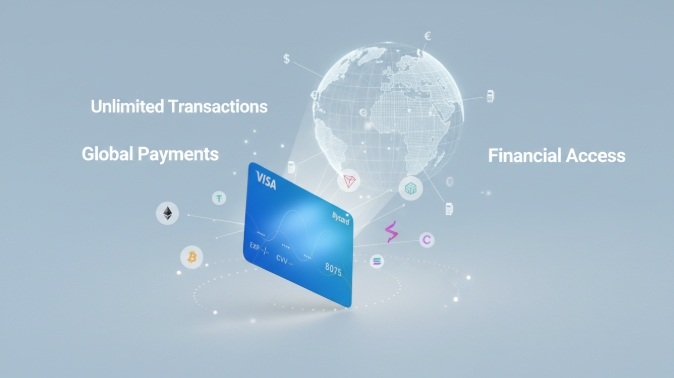
Bitcoin doesn’t have to choose between a store of value and medium of exchange, but achieving both requires infrastructure development and ecosystem maturation.
Lightning Network Maturation
The Lightning Network represents Bitcoin’s best hope for scalable payments. As channel capacity grows, routing algorithms improve, and user interfaces simplify, Lightning could enable instant, near-zero-fee Bitcoin transactions. Major developments in 2024-2025, including improved wallet integration and merchant tools, suggest Lightning may finally be approaching mainstream viability.
For Bitcoin to function as currency, Lightning must become invisible to end users. Success looks like people paying with Bitcoin without realizing they’re using Layer 2 technology.
Crypto-Fiat Bridge Platforms
Until Bitcoin achieves price stability, hybrid solutions that bridge cryptocurrency and traditional money will remain essential. Platforms that enable instant conversion between Bitcoin and local currency provide liquidity and usability without requiring users to bear volatility risk.
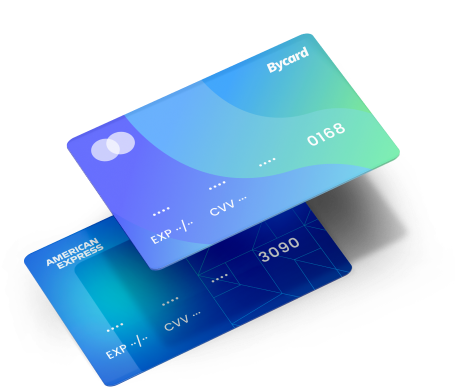
This is where Bycard plays a strategic role. Rather than forcing Bitcoin to compete directly with card networks, Bycard connects crypto balances to globally accepted virtual cards. Users can hold Bitcoin as a long-term asset while retaining the ability to spend instantly in USD or other supported currencies.
This is where services like Xbankang play a crucial infrastructure role. By offering instant payouts and competitive rates for converting Bitcoin to cash, such platforms enable Bitcoin holders to access liquidity when needed, effectively allowing Bitcoin to function as a savings instrument that can be converted to spendable currency on demand. This liquidity provision supports Bitcoin adoption by reducing the opportunity cost of holding cryptocurrency.
Stablecoins as Compromise
Many observers believe stablecoins, cryptocurrencies pegged to fiat currency, will become the dominant medium of exchange, while Bitcoin serves as a reserve asset. This division of labor acknowledges Bitcoin’s volatility makes it unsuitable for daily commerce, while still recognizing its value as censorship-resistant digital property.
In this scenario, Bitcoin functions more like gold in the historical gold standard: a settlement layer and reserve asset that backs more transactional currencies.

Perfect Card for Transactions!
Regulatory Clarity
Merchant adoption requires regulatory certainty. Clearer tax treatment (particularly eliminating capital gains tax on small Bitcoin transactions), licensing frameworks for crypto payment processors, and consumer protection standards would reduce friction for businesses considering Bitcoin acceptance.
Governments worldwide are developing regulatory frameworks for cryptocurrency. The 2025-2026 period may provide the clarity necessary for institutional and merchant adoption.
The “Both/And” Scenario
Bitcoin can plausibly serve both functions: a long-term store of value that occasionally circulates as currency. Just as people hold real estate investments but sometimes sell properties, or accumulate gold but occasionally liquidate holdings, Bitcoin investors might predominantly hold while selectively spending or converting when advantageous.
This requires accepting that Bitcoin will never match credit cards for daily coffee purchases, and that’s okay. Bitcoin might instead excel at international remittances, large value transfers, and providing financial access in countries with unstable currencies, while simultaneously serving as portfolio diversification for investors.
Supporting Ecosystem Liquidity
Every Bitcoin holder should have a plan for converting crypto to fiat when circumstances require. Whether for emergencies, opportunities, or simply realizing gains, easy conversion is essential. Platforms offering instant Bitcoin-to-cash conversion with transparent rates reduce the friction of holding cryptocurrency, making Bitcoin more practical as part of a diversified financial strategy.
Conclusion
Bitcoin’s tension between being a store of value and a medium of exchange is not a flaw but part of money’s historical evolution. Gold once operated as both currency and reserve before becoming primarily a hedge asset, while the US dollar functions as everyday spending money at home and a value anchor globally. Bitcoin may follow a similar path through specialization and stronger infrastructure. As a reserve asset and settlement layer, it offers scarcity and censorship resistance.
Through Layer 2 networks and bridge platforms like Bycard, it can also connect to everyday payments without forcing merchants to overhaul systems. Mass adoption won’t depend on buying coffee directly with Bitcoin, but on excelling in transfers, savings protection, and financial access. With seamless conversion tools in place, Bitcoin can realistically operate as both digital gold and usable money.

CATEGORIES
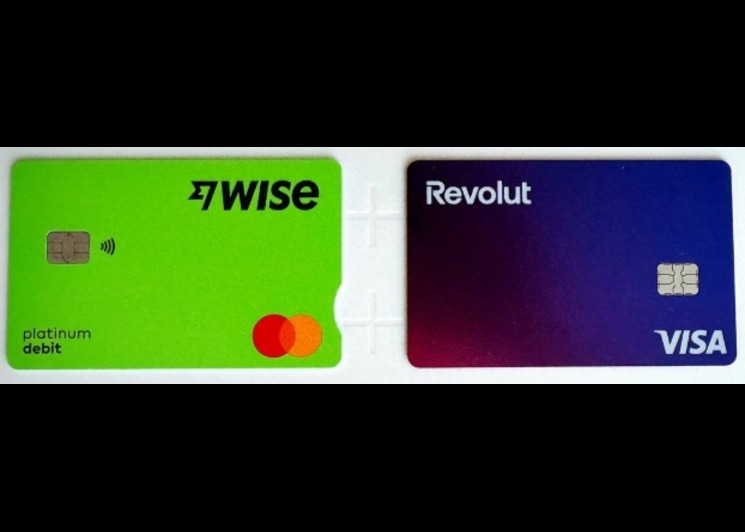
Wise or Revolut? Comparing the Best Multi-Currency Card
Wise Alternatives That Make Payment Faster and Currency Conversion Simple

Wire Transfer vs Bank Transfer for Better & Swift Business Payments

Why Travel Rewards Credit Cards are Highly Important
Why the Ramp Card Might Be the Best Business Card

Why Sales and Discounts Make You Overspend
