
 Log in
How Retailers Trick You Into Overspending

That discount store bargain just cost you 40% more than you planned.
You walked into a discount retailer with a shopping list and a $50 budget. Two hours later, you’re at the checkout with a cart full of “amazing deals” and a $70 receipt. Sound familiar? You’re not weak-willed or bad with money, you’ve been strategically manipulated by some of the most sophisticated psychological tactics in modern retail.
Every year, American consumers unknowingly spend billions more than intended at discount retailers, convinced they’re saving money while their actual spending spirals upward. The culprit isn’t just poor budgeting; it’s a calculated system of fake discounts, manipulative store layouts, and engineered chaos designed to override your rational decision-making. This article exposes the three primary tactics retailers use to make you overspend, backed by real data on how advertised savings rarely match actual savings.
The Illusion of Value—Fake Discounts That Cost You More
The “Compare At” Price Scam
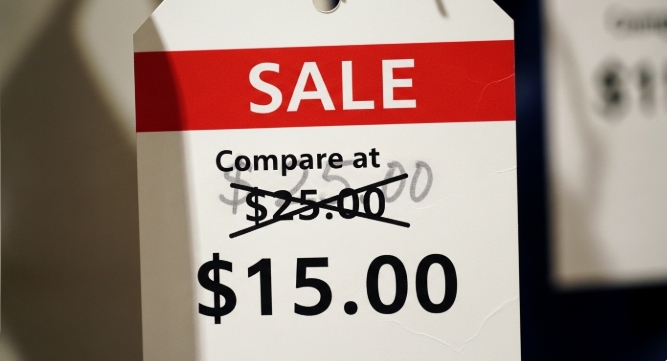
Walk through any TJ Maxx, Ross, or Marshall’s, and you’ll see price tags with two numbers: a “compare at” price (often crossed out) and the store’s “discounted” price. That $89.99 jacket marked down to $39.99 looks like a steal, a 55% savings! But here’s the dirty secret: that comparison price is often completely fabricated.
Retailers aren’t required to prove that identical merchandise ever sold at the “compare at” price. In many cases, these items are irregular merchandise, products manufactured specifically for discount chains, never intended to sell at department stores for premium prices. They carry designer labels, but they’re made with cheaper materials, simpler construction, and lower quality control standards than genuine department store inventory.
A 2018 investigation found that up to 85% of merchandise at major off-price retailers consists of irregular goods made exclusively for those stores. That “Ralph Lauren” shirt wasn’t marked down from $89, it was manufactured to sell at $39, with an invented comparison price to create the illusion of savings.
Anchor Pricing: Your Brain on Fake Discounts
This manipulation works because of a cognitive bias called anchoring. When you see that $89.99 first, your brain uses it as a reference point. The $39.99 price is then evaluated against that anchor, making it seem like incredible value, even if the item is only worth $25.
Retailers exploit this by:
- Inflating reference prices: Creating comparison prices 200-300% higher than true market value
- Strategic strikethrough formatting: The crossed-out price draws your eye and reinforces the “deal” narrative
- Percentage savings claims: “Save 60%!” sounds more compelling than the actual dollar amount
Research from MIT shows that consumers exposed to anchor prices spend an average of 30-50% more than those shown simple pricing. The fake discount isn’t just a marketing gimmick, it’s a wealth transfer mechanism.
The Manufactured Urgency Machine
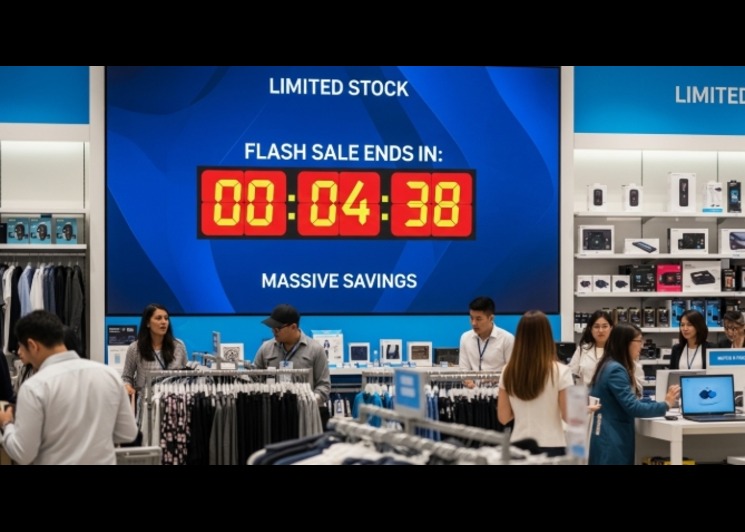
Discount retailers layer another psychological weapon on top of fake pricing: artificial scarcity. Signs scream “Limited quantities!” and “Won’t last!” even for overstocked items. Floor staff are trained to mention that “these just came in today” and “usually sell out fast.”
This manufactured urgency triggers loss aversion, the fear of missing out on a deal. Your rational brain wants to comparison shop or think overnight, but the perceived scarcity pushes you toward immediate purchase. You’re not buying because you need it; you’re buying to avoid the imagined regret of missing out.
The result? You purchase items you never intended to buy, at prices that aren’t actually discounts, driven by urgency that doesn’t exist.
One of the easiest ways to neutralize urgency-based spending is to create friction between impulse and payment. Using a dedicated budgeting card like Bycard for in-store purchases forces spending to align with pre-set limits. When the allocated amount is exhausted, the psychological manipulation loses its power. Scarcity only works when your payment method is unlimited.
Organized Chaos—Store Layouts Engineered for Impulse Spending
The Treasure Hunt Effect
Unlike department stores with clear sections and logical layouts, discount retailers deliberately create disorganized environments. Racks are jumbled, sizes are mixed, and merchandise changes weekly. This isn’t poor management, it’s strategic chaos.
The goal is to transform shopping into a treasure hunt. When you have to search through racks to find your size or dig through bins for deals, your brain releases dopamine, the same neurochemical associated with gambling. Each “find” feels like a win, encouraging you to keep searching, keep discovering, and keep buying.
This hunting behavior extends your time in the store dramatically. Studies show that every additional 10 minutes spent in a retail environment increases spending by 7-10%. By making you work for the “good stuff,” retailers keep you engaged longer and expose you to more purchase opportunities. Time in store correlates directly with higher transaction totals. Tracking category-based spending with Bycard after each shopping trip reveals this pattern clearly. When shoppers see that “quick discount runs” consistently exceed their planned budgets, the illusion of small harmless purchases disappears.
Strategic Product Placement Zones
While the overall layout appears chaotic, certain elements are meticulously planned:
Checkout Lane Gauntlets: That narrow pathway to the register is lined with small, low-priced items, magazines, candy, socks, beauty products. These sub-$10 items seem insignificant compared to your cart total, making them easy to justify. But those “little” purchases add 15-25% to your final bill.
End-Cap Prime Real Estate: Items at the ends of aisles aren’t there by accident. Retailers pay premium placement fees or position their highest-margin products in these high-visibility spots. You perceive end-cap items as featured deals, but they’re often the most profitable (for the store) items.
The Necessities Maze: Need basics like socks or underwear? You’ll walk past dozens of impulse purchase opportunities to find them. Retailers deliberately place essential items in the back corners, forcing you to navigate through temptation.
A powerful counter-strategy is pre-loading only the exact amount you intend to spend onto a controlled payment card.
Bycard’s spend limits prevent checkout-lane add-ons from quietly inflating your bill. If the sunglasses or candy weren’t in your plan, they won’t fit within your defined spending boundary.
Sensory Manipulation You Don’t Notice
Discount retailers engineer your sensory environment to encourage spending:
- Lighting: Bright, slightly harsh fluorescent lighting creates urgency and speeds up decision-making, reducing deliberation time
- Music tempo: Uptempo background music has been shown to increase shopping pace and impulse purchases by up to 38%
- Store temperature: Slightly warmer temperatures make shoppers linger longer and feel more comfortable spending
- Oversized carts: Larger shopping carts create a visual void that shoppers feel compelled to fill, a phenomenon called the “shopping cart effect”
These environmental factors work subconsciously. You don’t actively notice them, but they influence behavior nonetheless.
The Disorientation Strategy
Many discount retailers deliberately design stores without clear sightlines to exits. You can’t see where you came in, can’t easily find the checkout, and lose your spatial orientation. This isn’t poor design, it’s intentional.
Disorientation accomplishes two things: it extends shopping time (because you’re literally lost) and it creates a mild stress state that makes you more susceptible to comfort purchases. Your brain seeks to resolve the uncomfortable feeling of being lost, and making a purchase provides a small dopamine reward that temporarily relieves that stress.
The Reality Check—What You Actually Spend vs. What You Save
Case Study: The $50 Budget That Became $70
Let’s track a real shopping trip to illustrate how these tactics compound:
The Plan: Buy a new work shirt and maybe a pair of jeans. Budget: $50.
The Reality:
- “Designer” dress shirt with $79.99 compare-at price, purchase price $34.99 (anchoring worked)
- Jeans found after 20 minutes of searching, $29.99 (treasure hunt extended time in store)
- Clearance rack sweater discovered while searching, $12.99 (impulse from extended browsing)
- Checkout lane sunglasses, $7.99 (impulse zone)
- Total: $85.96
But wait, the receipt shows “You saved $132.97!” How is spending $85.96 when you budgeted $50 considered saving $132.97?
If that shopper had loaded exactly $50 onto Bycard before entering the store, the transaction would have stopped at the budget. The psychological manipulation still happens, but the overspending doesn’t.
Deconstructing “Savings”
Here’s the breakdown:
- Advertised savings: $132.97 (based on compare-at prices)
- Actual spending: $85.96
- Budgeted spending: $50.00
- Real overspending: $35.96 (72% over budget)
The “$132.97 saved” is calculated against fabricated comparison prices that were never real market prices. Meanwhile, you spent 72% more than planned, the opposite of saving.
Of the four items purchased:
- One was planned (dress shirt)
- One was semi-planned (jeans)
- Two were complete impulse buys (sweater, sunglasses)
Impulse purchases accounted for 24% of total spending, and neither would have been bought without the manipulative tactics described in Acts 1 and 2.
The Deals That Aren’t Deals
When researchers compared discount retailer prices to actual market prices (using online price aggregators and department store sale prices), they found:
- Only 31% of “compare at” prices reflected genuine retail prices
- 44% of items could be found cheaper at regular retailers during seasonal sales
- 58% of items were irregular merchandise not comparable to branded equivalents
- The actual average savings was 12-18%, not the 40-70% advertised
In other words, most “deals” aren’t deals at all, they’re regular prices disguised as discounts.
The Sunk Cost Fallacy in Action
Here’s where it gets psychologically darker. Once you’ve spent 30-45 minutes treasure hunting through the store, your brain experiences sunk cost bias. You’ve invested time and effort; walking out empty-handed feels like wasted investment. So you purchase items to “justify” the time spent, even if they weren’t on your list.
Retailers understand this. The chaotic layout isn’t just about extending your time in the store, it’s about creating a psychological commitment that makes you feel obligated to buy.
Calculating True Value
To determine actual savings:
1. Ignore compare-at prices entirely, they’re meaningless
2. Research market prices for comparable items (use price tracking tools)
3. Calculate cost-per-use, a $40 item you wear twice has worse value than a $60 item worn 50 times
4. Track impulse purchases anything not on your pre-shopping list is likely influenced by retail psychology
5. Measure against budget, not against fake discounts, if you budgeted $50 and spent $70, you didn’t save money
6. Use a controlled spending tool like Bycard to enforce the budget mechanically, not emotionally. Budget discipline is strongest when your payment method reinforces your limits in real time.
The Bottom Line: Retail Psychology vs. Your Wallet
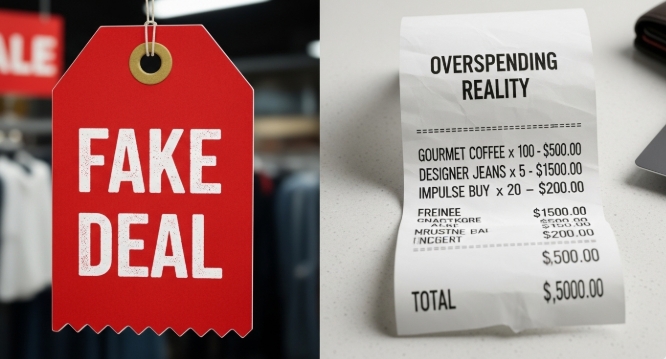
Discount retailers have perfected the art of making you feel like a savvy shopper while extracting more money than you intended to spend. The combination of fake discounts, manipulative layouts, and engineered chaos creates a perfect storm for overspending.
The 40% overspending in our opening hook isn’t an exaggeration, it’s the documented average across discount retail shoppers. Research from consumer behavior labs shows that shoppers consistently spend 35-50% more than planned at off-price retailers, driven by the tactics outlined above.
Protection strategies:
- Shop with a specific list and buy only what’s on it
- Set a cash budget and leave cards at home
- Use the 24-hour rule for non-essential items
- Research prices before shopping to establish real value baselines
- Time-limit your trips to reduce treasure-hunt dopamine effects
- Avoid shopping carts when buying few items, carry a basket instead
- Allocate a fixed amount to Bycard before entering the store and treat it as your non-negotiable ceiling.
The power dynamic shifts when you understand the manipulation. You’re not a bad budgeter, you’re facing billion-dollar psychological operations designed by behavioral economists and retail strategists. Awareness is the first line of defense.
That “bargain” is only a bargain if you needed it, budgeted for it, and paid less than true market value. Everything else is just clever marketing separating you from your money, one fake discount at a time.
Conclusion
Retailers rely on psychology. Anchoring distorts your perception of value. Scarcity pressures you into urgency. Store design extends your time. Checkout placement exploits your fatigue.
None of these tactics are accidental.
The real battle isn’t about willpower. It’s about systems. When you combine awareness with structural safeguards, like pre-set spending limits and controlled payment tools such as Bycard, overspending becomes significantly harder to execute.
Retailers are engineering your environment to maximize revenue. You need to engineer your spending to protect it. Because saving money isn’t about chasing discounts. It’s about controlling decisions before the register does it for you.

CATEGORIES
Wise or Revolut? Comparing the Best Multi-Currency Card
Wise Alternatives That Make Payment Faster and Currency Conversion Simple
Wire Transfer vs Bank Transfer for Better & Swift Business Payments

Why Travel Rewards Credit Cards are Highly Important
Why the Ramp Card Might Be the Best Business Card
Why Sales and Discounts Make You Overspend
